Picking the best Electric Power Substations for 2026 isn’t just about lining up prices or glossy spec sheets. If you’re buying globally, you need proof from real sites—commissioning notes, protection relay test results, maintenance logs. A substation that looks great in a dry inland area might not handle coastal salt, tropical humidity, or brutal winter cold. So the evaluation has to dig into voltage class, transformer capacity, fault levels, grid stability, automation, and room for expansion.
This guide looks at options from big names like Siemens Energy, Hitachi Energy, Schneider Electric, ABB, GE Vernova, and Eaton. We compare air-insulated vs gas-insulated designs, digital substations, prefab modules, fire protection, cybersecurity, and remote monitoring. But the practical stuff really matters. Ask about transformer noise, enclosure ratings, spare-part availability, relay coordination, and how long it takes to swap out a damaged bushing. IEC and IEEE alignment helps with international projects, sure—but local grid codes still need a close look. Compliance? Never automatic.
No ranking is perfect. Supplier data tends to shine a light on lab performance, while field conditions expose different weak spots. That caveat matters. A sound decision should pull together factory inspection, independent testing, lifecycle-cost analysis, and references from similar projects. Experienced engineers should check heat dissipation, grounding, cable routing, and emergency access before anyone signs off. Price still counts, of course. But a cheap substation can get very expensive through outages, slow parts, or painful upgrades. The best choice balances proven performance, clear documentation, local service support, and long-term resilience. After all, real substations have to keep working quietly, safely, and consistently at three in the morning. That’s the bar global buyers should use.
Electric Power Substations: Functions, Voltage Classes, and 2026 Market Scope
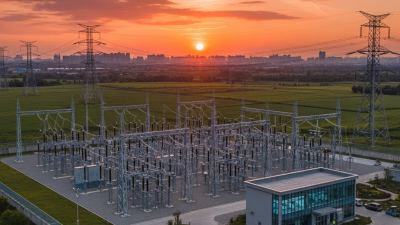
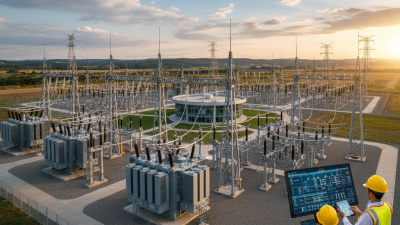
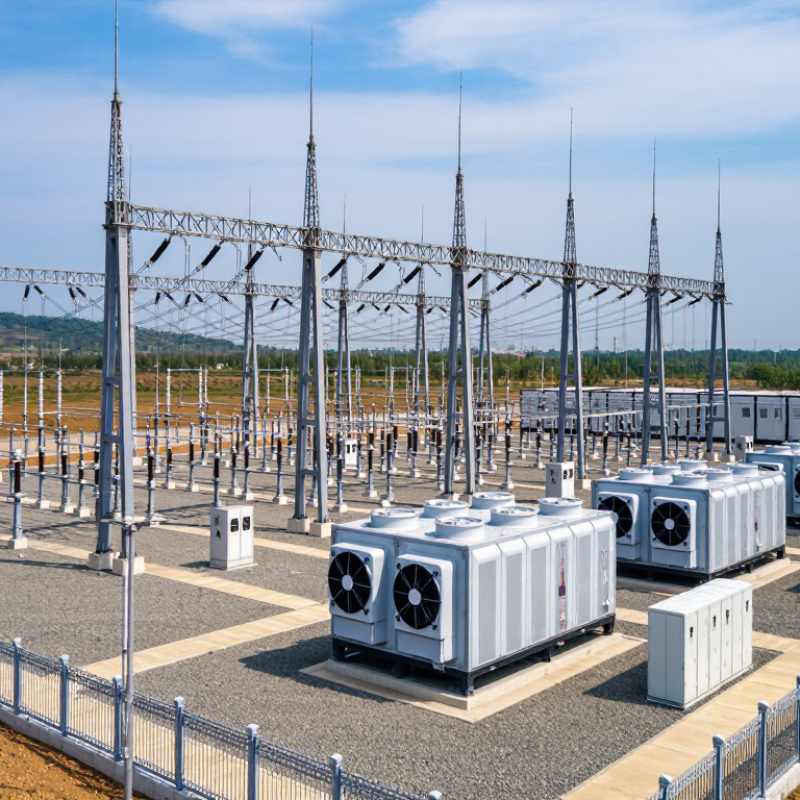
Electric power substations connect generation, transmission, and distribution networks. They transform voltage, control power flow, and isolate faults during abnormal conditions. In a working yard, transformers hum beside steel structures, while circuit breakers respond within milliseconds. Protection relays, busbars, and grounding systems must operate together, not separately.
Voltage classes shape equipment selection and project cost. Medium-voltage substations often serve industrial facilities and local distribution networks. High-voltage installations support regional transmission and renewable energy connections.
Extra-high-voltage systems carry bulk power across long distances, but require larger clearances, stronger insulation, and more complex protection. Field conditions vary. Heat, dust, flooding, and limited access can change the best design.
The 2026 market scope is expanding beyond traditional grid reinforcement. New projects increasingly support solar plants, wind farms, battery storage, electric transport, and flexible industrial loads. Digital monitoring can track temperature, partial discharge, breaker timing, and transformer condition. This improves maintenance decisions, although poor data quality can create false confidence. Buyers should request verified test records, fault-level studies, maintenance access plans, and compliance documentation for the project location. A neat specification can still fail in practice. Engineers need to check interfaces, spare parts, communication protocols, and emergency procedures before procurement. Modular and compact substations may shorten installation time, yet they can restrict future expansion if the site plan is too tight.
Substation Architectures: AIS, GIS, and Hybrid Designs from 11 kV to 765 kV
Global buyers now need substation designs that handle rising demand, renewable variability, and tighter land limits. The IEA Electricity 2025 report projects global electricity demand to grow by about 4% annually through 2027. That pressure reaches every voltage class, from 11 kV distribution feeders to 765 kV transmission corridors.
AIS
AIS remains practical where land is available and maintenance access matters. Its visible busbars simplify inspection, fault localization, and future extensions. At 11 kV to 132 kV, AIS often supports cost-sensitive industrial and utility projects.
GIS
GIS uses sealed gas-insulated compartments, reducing exposure to dust, salt, humidity, and wildlife. It suits dense cities, coastal sites, and underground installations. The trade-off is less visual access and more specialized maintenance. CIGRE technical guidance repeatedly highlights lifecycle planning, condition monitoring, and switching safety in GIS applications.
Hybrid designs
Hybrid designs combine AIS bus sections with GIS breakers, compact feeder bays, or gas-insulated line connections. They can reduce land use without making every component inaccessible. This approach is useful at 220 kV, 400 kV, and 765 kV sites where expansion space is uncertain. The U.S. Department of Energy’s Large Power Transformer report also identifies long procurement cycles and grid resilience as major planning concerns. Voltage alone should not decide the architecture. Soil, climate, outage tolerance, spare-part access, and operator skills matter too. I would not treat GIS as automatically superior. A compact design can still fail operationally when training, testing, or emergency access receives too little attention.
Core Equipment: Transformers, Breakers, Busbars, CTs, and Protection Systems
For global buyers, a substation should be judged by its operating details, not its brochure appearance. The transformer sets voltage levels, thermal capacity, and much of the installation footprint. Specify rated power, vector group, impedance, cooling method, and expected ambient temperature. A unit running near its limit may age faster, especially in dusty or humid sites. Keep clearance around radiators and inspect oil, bushings, and seals during planned maintenance. Small details matter.
Circuit breakers must interrupt faults safely and coordinate with upstream and downstream devices. Vacuum breakers suit many medium-voltage applications, while higher-voltage projects need verified interruption ratings. Ask for short-circuit withstand data, operating cycles, trip-coil supervision, and mechanical endurance records.
Busbars carry continuous current, but their joints often deserve more attention than their length. Check temperature-rise performance, insulation spacing, enclosure protection, and access for torque verification.
Current transformers must match protection and metering duties; accuracy can change during heavy faults. Confirm ratio, burden, class, knee-point voltage, and polarity before commissioning. Protection systems should provide selective tripping, event records, battery supervision, and dependable communication.
Prefabricated Substations can shorten site work, but transport limits and local foundation conditions still require engineering review. I have seen schedules improve while testing was compressed, a risky tradeoff that deserves reconsideration. No checklist is perfect.
Capacity and Reliability: N-1 Planning and Availability Targets Above 99.99%
2026 Best Electric Power Substations for Global Buyers
Capacity and reliability should be specified together.
A substation rated for peak load may still fail during maintenance. N-1 planning keeps power available after one transformer, feeder, or bus section is lost. For a 500 MW load, planners should test the remaining assets against seasonal peaks, cooling demand, and delayed replacement parts.
A 99.99% availability target allows only 52.56 minutes of annual interruption.
That margin is narrow.
The Uptime Institute’s 2024 Global Data Center Survey reported that more than half of operators experienced an outage within three years. Its findings also connect serious incidents with human error, power problems, and weak operational processes. NERC’s 2024 State of Reliability report highlighted growing risks from extreme weather, changing generation patterns, and transmission constraints. These findings support layered protection, diverse incoming circuits, automatic transfer schemes, and tested black-start procedures.
Yet N-1 is not a complete answer.
Common-mode faults can disable supposedly independent systems. Protection settings may also perform differently under unusual fault currents. That assumption deserves review. Buyers should request load-flow studies, short-circuit calculations, relay coordination records, and witnessed factory tests. Maintenance access matters too. A spare transformer stored nearby may reduce recovery time from months to days, but storage conditions can quietly weaken it. Reliability targets above 99.99% require measured performance, not only impressive specifications.
Safety Standards: IEC 62271, IEC 60076, IEEE 80, and 50/60 Hz Grids
Global buyers should treat safety standards as design controls, not decorative certificates. IEC 62271 governs high-voltage switchgear and controlgear, including insulation, mechanical operation, and internal arc performance. Inspectors should verify test reports, enclosure ratings, interlocks, and clearances before shipment. A door should not open casually.
IEC 60076 applies to Electric Transformers and defines key requirements for temperature rise, insulation, losses, and dielectric testing. Ask for routine and type-test evidence that matches the ordered configuration. During factory inspection, check bushings, cable terminals, oil levels, and nameplate data. Small discrepancies matter. A mismatched frequency rating can create costly problems.
IEEE 80 provides practical guidance for grounding substations and controlling touch and step voltage. Soil resistivity testing should support the grounding-grid design, not merely confirm a drawing. Measure bonding continuity around fences, structures, tanks, and cable screens. The work becomes more complex when grids operate at 50 or 60 Hz. Frequency affects system studies, protection settings, and transformer losses. Buyers should also confirm local utility rules, environmental conditions, and fault-current assumptions. Standards are essential, but they do not replace engineering judgment. A compliant file can still hide an unsuitable installation. That deserves a second review.
2026 Best Electric Power Substations for Global Buyers
Safety Standards: IEC 62271, IEC 60076, IEEE 80, and 50/60 Hz Grids
The chart compares the two internationally common power-system frequencies. In a 100 ms interval,
a 50 Hz grid completes 5 cycles, while a 60 Hz grid completes 6 cycles. Substation selection should
also verify alignment with IEC 62271 for high-voltage switchgear, IEC 60076 for power transformers,
and IEEE 80 for substation grounding safety.
Digital Substations: IEC 61850, SCADA, and Millisecond-Level Protection Data
Digital substations are changing how global buyers evaluate electric power infrastructure. The focus is no longer limited to transformers, breakers, and physical wiring. Communication quality matters just as much.
IEC 61850 creates a common language for protection, control, and monitoring devices. Its process bus can carry sampled values and trip signals through structured Ethernet networks. In a well-engineered station, protection data can reach the correct relay within milliseconds. That speed helps isolate faults before they damage larger sections of the grid.
SCADA systems add operational visibility. Operators can view breaker positions, voltage trends, alarms, and event records from one control interface. During commissioning, engineers should test time synchronization, network redundancy, and signal accuracy under realistic load conditions. Small configuration errors can produce misleading status screens. They happen.
An Electric Distribution Box still has a practical role in station auxiliaries and local feeder management. However, it should support the broader digital architecture rather than remain an isolated cabinet. Buyers should request clear data maps, cybersecurity controls, maintenance procedures, and tested recovery plans. A polished demonstration is not enough. Field conditions are harsher.
Millisecond performance also depends on network design, clock accuracy, sensor quality, and disciplined testing. Some projects overestimate automation and underestimate training. That balance deserves a second review before purchase. Reliable substations come from verified engineering, documented testing, and operators who understand what the data means.
Global Buyer Checklist: Cost, Lead Time, Climate, Grid Codes, and 25–63 kA Ratings
The 2026 substation buyer should start with the grid duty, not the catalogue price. The IEA Electricity 2024 report projects global electricity demand growth of about 3.4% annually through 2026. That growth increases pressure on dependable medium- and high-voltage equipment.
Check whether a 3 Phase Electric Transformer matches local voltage, frequency, vector group, impedance, and neutral requirements. For fault duty, confirm the required 25–63 kA short-circuit rating under IEC 62271 or the applicable IEEE standard. A higher rating is not automatically better. It can increase enclosure size, cost, and maintenance complexity. Ask for verified type-test reports, temperature-rise data, and routine-test records.
Cost must include freight, installation, oil handling, protection relays, and spare parts. Lead time should cover design approval, factory testing, port delays, and customs clearance. IEA’s Electricity Grids and Secure Energy Transitions report estimates annual grid investment must rise to more than USD 600 billion by 2030, nearly double current levels. Buyers should reserve production capacity early. Climate checks are equally practical: specify altitude derating, 45°C ambient operation, humidity, salt fog, dust, flooding, and seismic conditions. Grid-code documents should define grounding, reactive-power control, harmonics, communications, and protection coordination. I have seen low bids fail because the enclosure suited a dry warehouse, not a coastal substation. That mistake is avoidable.
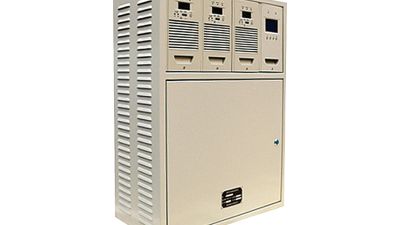
How High-Quality PZDW Wall-Mounted DC Power Supply Systems Enable Compact Electrical Installations
High-quality wall-mounted DC power supply systems are helping electrical engineers build compact installations without sacrificing reliability. The International Energy Agency’s *Electricity 2024* report estimates that data centers consumed about 460 TWh of electricity in 2022 and could exceed 1,000 TWh by 2026, increasing pressure on operators to optimize space, efficiency, and power continuity. In small-capacity applications, a modular DC system with an integrated power cabinet, battery cabinet, and optional signal cabinet can reduce equipment footprint while simplifying installation and maintenance.
A modern wall-mounted solution combines efficient power conversion with intelligent supervision. An easy-to-use LCD interface provides clear operating information, while automated battery management supports safer charging, monitoring, and maintenance decisions. Support for RTU, CDT, and MODBUS communication protocols also enables smooth connection with automation, protection, and building-management systems. The U.S. Department of Energy’s *2024 Data Center Energy Usage Report* emphasizes the growing importance of energy efficiency and resilient infrastructure as digital loads expand. For factories, telecom facilities, substations, and other space-constrained sites, a carefully engineered DC power system can deliver dependable backup performance in a compact format, with modular construction allowing capacity and monitoring functions to be matched to practical installation requirements.
FAQS
Confirm rated power, voltage levels, vector group, impedance, cooling method, and expected ambient temperature. Leave space around radiators. Dust and humidity can accelerate aging.
Inspect oil, bushings, seals, and radiator clearance during planned maintenance. Check operating temperature and loading trends. Small details matter.
Request interruption ratings, short-circuit withstand data, operating cycles, trip-coil supervision, and mechanical endurance records. Confirm coordination with connected protection devices. Paper ratings need practical verification.
Check continuous-current capacity, temperature rise, insulation spacing, enclosure protection, and joint accessibility. Poorly tightened joints may overheat. Length alone proves little.
Match each transformer to its protection or metering duty. Confirm ratio, burden, accuracy class, knee-point voltage, and polarity. Accuracy may change during severe faults.
It should support selective tripping, event records, battery supervision, and dependable communication. Test fault responses across connected devices. A complete checklist still has limits.
Review communication quality, network redundancy, time synchronization, signal accuracy, and recovery procedures. Test status screens under realistic conditions. Small configuration errors happen.
They can shorten site work and simplify installation. Transport limits and local foundation conditions still require engineering review. Faster construction may compress testing, which is risky.
It can support station auxiliaries and local feeder management. It should connect with the wider digital architecture. An isolated cabinet creates avoidable gaps.
Automation cannot replace informed operators. Training helps staff interpret alarms, trends, and event records correctly. Reliable performance comes from testing, documentation, and practice.
Conclusion
Electric Power Substations are essential facilities that transform, control, protect, and distribute electricity across modern power networks. This guide explains their functions, voltage classes, and market scope in 2026, covering substation architectures from 11 kV to 765 kV, including air-insulated, gas-insulated, and hybrid designs. It also reviews key equipment such as transformers, circuit breakers, busbars, current transformers, and protection systems, while highlighting N-1 planning, availability targets above 99.99%, and reliability considerations for different grid environments.
The article further outlines important safety and technical standards, including IEC 62271, IEC 60076, IEEE 80, and requirements for 50/60 Hz systems. It introduces digital substations based on IEC 61850, SCADA integration, and millisecond-level protection data. For global buyers, the final checklist focuses on total cost, delivery schedules, climate suitability, grid-code compliance, maintenance needs, and short-circuit ratings from 25 kA to 63 kA, helping organizations select dependable and future-ready solutions.