
So you're looking for the best electrical substation suppliers for 2026? Honestly, it's not just about picking the flashiest brochure or the biggest revenue number. You've gotta think about how well a substation actually fits your grid, your climate, the safety codes you need to meet, and where you plan to grow. In this piece, we're digging into some big names like Siemens Energy, Hitachi Energy, GE Vernova, Schneider Electric, ABB, and Mitsubishi Electric. Sure, names carry weight, but what really counts is the proof behind them. When we look at what really matters here, it's not just one thing—it's the whole package. You've got the engineering know-how, the quality of the equipment, hands-on experience from commissioning, digital protection systems, and then the long-term support that keeps everything running smoothly. Honestly, all of these pieces need to come together for something solid.
You know, the real difference shows up when you actually get into a project. A good supplier shouldn't just hand you a brochure—they should be able to explain things like transformer losses, how the GIS performs, relay coordination, and even cyber resilience without making you feel lost. And it's not just about talk; you want to see test records, have qualified techs on site, get realistic delivery dates, and check out references from projects at similar voltage levels. Honestly, having local maintenance support can be just as important as whatever fancy factory tech they're showing off. I mean, sure, a modern control room with live alarms and temperature trends is great, but if you can't get someone to fix a breaker quickly, what's the point? Look, no matter how good your data is, it can't fix sloppy installation work. You still gotta verify things in practice, you know?
Now, a quick heads-up before we dive in: this overview isn't meant to be the final word. Honest truth is, info out there is pretty patchy, and what a supplier can do often depends on where you are and who's on their team. No way can a global ranking take the place of actually visiting a site, running a protection study, or poring over the contract. Some of our assessments are bound to have a subjective tint—I'll admit that upfront. So, don't just take our word for it. Check each claim against independent certifications, real-world performance records, warranty fine print, and references from people who've used them. And remember, the best pick isn't always the biggest name out there. So, the supplier's job is to actually deliver something that's not just safe, but also easy to maintain and, you know, measurable for the network we're targeting.
2026 Best Electrical Substation Suppliers Worldwide
Electrical substation suppliers provide far more than cabinets and transformers. They support planning, equipment selection, installation, testing, and long-term maintenance. Their Electrical Substation Equipment may include power transformers, circuit breakers, disconnectors, busbars, protection relays, control panels, and battery systems. Experienced suppliers study load demand, site conditions, fault levels, and future expansion before recommending a configuration. This practical review prevents costly mismatches. Still, no supplier gets every site decision right. Local weather and operating habits can expose overlooked weaknesses.
Reliable suppliers also provide engineering drawings, protection coordination studies, factory inspections, commissioning, operator training, and maintenance schedules. Digital monitoring can track oil temperature, breaker operations, humidity, and unusual vibration. These details help teams act before a small defect becomes an outage. Suppliers should explain test results clearly and provide traceable certificates, spare-parts lists, and emergency support terms. Authority comes from documented field experience, not impressive promises. A minor documentation gap can still delay maintenance.
Tips: Ask for a complete scope before comparing prices. Check reference projects with similar voltage and climate conditions. Confirm who handles site testing and grid approval. Request clear response times for failures. Visit a working installation if possible. Never select equipment from brochures alone. Crew feedback matters. A technically strong package may still fail if local technicians find it difficult to operate.
Electrical substation suppliers are best classified by the systems they deliver, not by catalog size. Buyers commonly separate them by voltage level: distribution, sub-transmission, transmission, and extra-high-voltage projects. Another useful split is function: step-up, step-down, switching, traction, renewable-collection, and grid-interconnection substations. Technology also matters, including air-insulated, gas-insulated, hybrid, and mobile designs. An Electrical Substation Transformer may be central to one category, but protection, control, civil works, and commissioning define the complete scope. These categories overlap.
The International Energy Agency reported that global grids may require 80 million kilometers of new or replaced lines by 2040. It also expects annual grid investment to exceed 600 billion dollars by 2030.
IRENA reported 585 gigawatts of renewable capacity additions in 2024, creating stronger demand for collector and interconnection substations.
A neat classification can mislead. A supplier may build reliable transformers but lack protection integration or site commissioning depth. That weakness appears during energization, not in a brochure.
Tips: Compare suppliers by voltage experience, testing facilities, IEC or IEEE compliance, delivery history, and local service coverage. Request factory-test records and references for similar climates. Check spare-parts planning. Cheap equipment can become expensive after one failed relay or delayed transformer. Procurement teams should also challenge their own scoring models; technical categories are useful, but they cannot replace site-specific risk reviews.
Modern substations rely on several technologies working together under severe operating conditions. Gas-insulated switchgear saves space in crowded urban sites. Air-insulated equipment remains practical where land and maintenance access are available. Engineers select each design according to climate, fault levels, and lifecycle costs.
Digital protection relays now process current and voltage signals within milliseconds. IEC 61850 communication allows intelligent devices to exchange structured data across the station. This reduces copper wiring and improves event analysis. However, poorly configured networks can create hidden weaknesses. Real-world testing still matters more than impressive specifications.
Online sensors monitor transformer temperature, moisture, dissolved gases, and bushing condition. Operators can identify overheating before oil darkens or insulation fails. Rmu Electrical project teams should connect these measurements to clear maintenance decisions, not collect data without purpose. Phasor measurement units also improve grid visibility during unstable conditions. Cybersecurity requires network separation, access controls, patch procedures, and tested recovery plans. Small gaps remain common. Human error still causes difficult outages.
Substations increasingly support solar farms, battery systems, and flexible industrial loads. Advanced automation can balance changing power flows while reducing manual switching. Yet automation should include reliable local controls for communication failures. Experienced suppliers verify protection settings through simulations, factory testing, and site commissioning. They also train operators beside the actual control panels, where alarms, labels, and cable routes reveal problems that drawings may miss.
Evaluating a substation supplier starts with evidence, not attractive brochures. Review experience with similar voltage levels, climates, fault conditions, and grid requirements. Ask for project references, verified performance records, and clear responsibility boundaries. A supplier with decades of history may still lack experience in your operating environment.
Technical compliance deserves detailed checking. Confirm design alignment with applicable IEC, IEEE, and national standards. Examine type-test reports, routine-test procedures, protection studies, and factory acceptance plans. Request drawings showing busbar arrangements, insulation coordination, grounding, fire separation, and cable access. Small omissions can create expensive delays during installation.
Site quality matters too. An independent audit should examine testing equipment, calibration records, material traceability, and worker competence. Evaluate delivery reliability, spare-parts planning, training, remote support, and emergency response times. Cybersecurity controls should cover engineering systems and connected substation devices. Financial stability also matters because projects can last several years.
Use a weighted scorecard, but do not treat it as absolute truth. Our own scoring models can overvalue documentation and undervalue field cooperation. Speak with operators who managed commissioning problems, not only sales contacts. Check whether the supplier reports weaknesses honestly. No supplier performs perfectly. The strongest partner usually identifies risks early, documents corrective actions, and remains accountable after energization.
Leading Electrical Substation Suppliers in 2026 are being judged by more than equipment price. The IEA’s Electricity 2024 report forecasts global electricity demand to grow by about 3.4% annually from 2024 to 2026. This expansion increases pressure on transformer capacity, switchgear availability, and commissioning teams.
Field experience shows that dependable suppliers share several traits. They provide verified short-circuit ratings, tested protection systems, and clear maintenance procedures. They also support digital substations with secure monitoring, remote diagnostics, and accurate event records. The IEC 61850 standard remains important for interoperable substation communication. Suppliers with regional service engineers often reduce downtime more effectively than suppliers offering only low factory prices.
Details matter most.
The IEA also reports that grids require faster investment to connect new generation and meet rising demand. Therefore, buyers should examine factory acceptance testing, transformer loss data, spare-part planning, and local compliance records. The Global Wind Energy Council’s 2024 report highlights continued rapid renewable deployment, which can create unstable power flows without flexible grid equipment. A supplier must understand these operating conditions, not simply deliver hardware.
A perfect ranking is impossible. Project quality depends on soil conditions, weather, regulations, and operator skill. Some suppliers communicate well but underestimate installation risks. Others provide excellent equipment yet weak after-sales support. In 2026, the strongest choices will combine engineering evidence, transparent warranties, cybersecurity controls, and practical field experience. Cost still matters, but the cheapest quotation may become the most expensive decision.
Comparing substation suppliers starts with project conditions, not glossy catalogs. Define voltage, fault level, altitude, climate, and expansion plans. A 132 kV outdoor yard needs different engineering from a compact urban installation. Ask suppliers for drawings, protection studies, test records, and references from similar projects. Experience appears in small details, such as cable entry space and maintainable isolators. References can be selective. Check operating hours, delivery dates, and unresolved defects with independent engineers.
Technical compliance should be measurable. Compare insulation levels, short-circuit ratings, temperature rise, corrosion protection, and control-system protocols. For Switchgear Electrical packages, review interlocking logic, arc-flash mitigation, relay coordination, and factory acceptance testing. Request a matrix showing every requirement, evidence, exception, and responsible party. Price alone misleads. A cheaper panel may require civil changes, longer commissioning, or unavailable spare modules. Also examine lead times, calibration certificates, cybersecurity controls, and warranty response arrangements.
Tips: Use weighted scoring for safety, serviceability, delivery, and lifecycle cost. Keep it auditable. Visit a reference site if possible, and speak with maintenance staff, not only sales teams. Our first comparison may still be wrong. Supplier data can hide assumptions. Record every unanswered question before contract discussions, especially those involving testing, spares, training, and future capacity.
In 2026, substation procurement is moving beyond the lowest-price offer. Utilities increasingly compare equipment life, outage risk, delivery capacity, and service support. Extreme heat, flooding, and wildfire exposure now influence site design and protection levels. Suppliers with regional engineering teams can adapt layouts to local codes and climate data. A practical tender may request factory test records, spare-part plans, and commissioning evidence. These details reveal capability better than polished sales claims.
Digital substations are gaining attention as utilities seek faster fault detection and better asset visibility. Intelligent protection systems can send temperature, breaker, and power-quality data to control centers. Data matters more. However, connectivity also increases cybersecurity duties, including access control, network segmentation, and tested recovery procedures. Procurement teams are asking for documented software updates and clear responsibility after installation. This trend favors suppliers with proven integration experience, not only strong hardware catalogs.
The supply market is also becoming more regional. Transport delays, raw-material shortages, and changing trade requirements encourage local assembly and multiple qualified sources. Modular substations can shorten construction schedules, especially where land or labor is limited. Environmental performance is another purchasing factor, covering material efficiency, leakage prevention, noise reduction, and end-of-life recycling. Yet forecasts remain imperfect. Some projects still overvalue digital features while underfunding maintenance training. Reliable decisions require site evidence, independent testing, and honest lifecycle calculations.
| Market Dimension | 2026 Planning Indicator | Observed Global Direction | Supplier Capability Required | Relevant Standard, Source or Technical Basis |
|---|---|---|---|---|
| Electricity demand growth |
Rising Global electricity demand is forecast to grow at an average annual rate of approximately 3.4% during 2024–2026. |
Additional transmission capacity, distribution reinforcement and grid automation are required to connect new loads and manage peak demand. | Scalable engineering, short delivery cycles, lifecycle service and spare-parts availability. | International Energy Agency, Electricity 2024, global demand outlook for 2024–2026. |
| Renewable-energy interconnection |
Very High Solar and wind projects continue to be major sources of new generation capacity, increasing demand for collector substations, step-up transformers and grid connection equipment. |
Substation projects increasingly require reactive-power control, dynamic voltage support, forecasting interfaces and flexible protection settings. | Renewable integration studies, power-quality analysis, STATCOM or capacitor-bank interfaces, and grid-code compliance. | International Renewable Energy Agency, Renewable Capacity Statistics 2024; applicable national grid codes. |
| Grid digitalization |
Accelerating Digital substations are moving from pilot projects toward broader deployment in transmission and high-value distribution networks. |
Demand is increasing for process-bus architectures, intelligent electronic devices, station-level automation and condition monitoring. | IEC 61850 engineering, interoperability testing, secure remote access, event recording and digital commissioning. | IEC 61850 series for communication networks and systems in power utility automation. |
| Cybersecurity readiness |
Mandatory Connected substations require documented cyber-risk controls throughout design, commissioning and operation. |
Utilities are strengthening asset inventories, role-based access, network segmentation, patch governance and incident response. | Secure-by-design engineering, vulnerability management, audit trails and operational-technology security procedures. | IEC 62351 series for power-system communication security; ISO/IEC 27001 security-management principles. |
| High-voltage equipment demand |
Strong Transmission expansion and renewable corridors support continued demand for power transformers, circuit breakers, disconnectors, instrument transformers and surge arresters. |
Procurement is increasingly focused on thermal performance, fault-duty capability, reliability, maintainability and factory-test transparency. | Verified type-test records, routine-test documentation, factory acceptance testing and long-term service support. | IEC 62271 series for high-voltage switchgear and controlgear; IEC 60076 series for power transformers. |
| Gas-insulated switchgear |
Selective Growth GIS remains valuable where land is limited, reliability requirements are high or environmental conditions are demanding. |
New projects increasingly evaluate alternatives with lower greenhouse-gas impact and stronger gas-management controls. | Compact layouts, leakage monitoring, gas-handling procedures, environmental declarations and end-of-life recovery plans. | IEC 62271-203 for gas-insulated metal-enclosed switchgear; applicable environmental and fluorinated-gas regulations. |
| Air-insulated switchgear |
Broad Use AIS continues to be widely selected for outdoor substations where land availability and insulation coordination permit open-air layouts. |
Cost efficiency, visual inspection, straightforward expansion and easier access remain important selection factors. | Corrosion protection, pollution-performance design, safe clearances, modular extension capability and maintainable layouts. | IEC 62271 series; insulation-coordination requirements under IEC 60071. |
| Medium-voltage distribution automation |
High Volume Feeder automation, fault isolation and service restoration are key requirements for modern distribution networks. |
Utilities are adopting reclosers, sectionalizers, remote terminal units, automated feeder schemes and outage-management integration. | Interoperable control systems, reliable communications, protection coordination and remote-operability testing. | IEC 62271-200 for AC metal-enclosed switchgear; IEC 60870-5-104 and IEC 61850 for utility communications. |
| Transformer efficiency and resilience |
Priority Transformer selection increasingly considers total cost of ownership rather than purchase price alone. |
Utilities are emphasizing low losses, overload capability, online monitoring, fire safety, noise control and resilience to extreme weather. | Loss guarantees, thermal modeling, dissolved-gas monitoring options, seismic design and emergency-replacement planning. | IEC 60076 series; utility-specific efficiency, noise, seismic and environmental specifications. |
| Battery-energy-storage connection |
Fast Expansion Utility-scale battery projects require dedicated collector systems, step-up transformers, protection, metering and supervisory controls. |
Substation designs increasingly accommodate bidirectional power flow, rapid dispatch, harmonic management and additional fire-safety interfaces. | Battery-grid integration studies, protection for bidirectional current, harmonic assessment and emergency-response coordination. | Applicable national grid codes, IEC power-system standards and project-specific battery safety requirements. |
| HVDC and long-distance transmission |
Strategic Growth HVDC is increasingly considered for long-distance bulk transfer, subsea links and asynchronous-grid interconnections. |
Projects require converter stations, specialized protection, harmonic filters, smoothing reactors and advanced control systems. | Converter-station engineering, electromagnetic-transient studies, harmonics expertise and high-voltage testing capability. | IEC 62501 for voltage-sourced converter valves; project-specific HVDC planning and grid-code requirements. |
| Extreme-weather resilience |
Increasing Importance Heat, flooding, wildfire, storms and ice loading are becoming important design inputs in many regions. |
Substation owners are raising equipment ratings, improving drainage and elevation, strengthening physical protection and diversifying critical spares. | Climate-risk assessment, flood elevation design, fire mitigation, seismic qualification and business-continuity planning. | Project climate studies, local construction codes, IEC equipment standards and utility resilience specifications. |
| Supply-chain reliability |
Critical Long-lead equipment, especially large power transformers and specialized switchgear, remains a major procurement risk. |
Buyers increasingly request confirmed production capacity, dual sourcing, milestone visibility and documented component traceability. | Manufacturing-capacity disclosure, approved-vendor control, quality plans, logistics management and contingency inventory. | IEC 60076 and IEC 62271 test requirements; contract-specific quality-assurance and inspection plans. |
| Local-content and regional service |
Project Dependent Public infrastructure tenders in many markets include local-content, workforce or domestic-service requirements. |
Regional engineering centers, commissioning teams, warehouses and training programs can materially reduce project risk. | Local technical support, multilingual documentation, certified field personnel and guaranteed response times. | Applicable public-procurement rules, utility qualification procedures and project contract conditions. |
| Supplier evaluation priority |
Highest priority Technical compliance, reliability evidence, delivery confidence and lifecycle support should be assessed before price. |
Best-performing suppliers are typically differentiated by validated references, transparent testing, digital capability and after-sales responsiveness. | Weighted tender scoring covering technical compliance, quality, schedule, cybersecurity, sustainability, service and total cost of ownership. | Recommended procurement practice based on IEC compliance, utility qualification systems and project risk-management principles. |
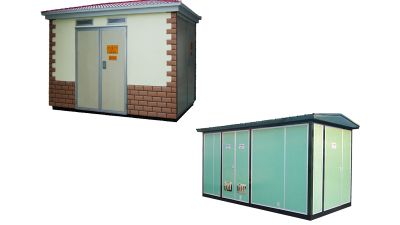
The YB□ prefabricated substation integrates high-voltage equipment, a transformer, and low-voltage distribution panels within one compact enclosure. This factory-integrated design simplifies installation, reduces on-site construction requirements, and makes efficient use of limited space. It is suitable for urban complexes, residential communities, industrial parks, infrastructure projects, and temporary power distribution sites where dependable electricity is essential.
As a practical solution for modern power networks, the substation supports flexible configurations, including ring-main and dual power supply arrangements. These options help improve supply continuity and allow the system to adapt to different distribution layouts and operating conditions. Its enclosed structure also provides organized equipment protection and convenient maintenance access, while factory assembly helps maintain consistent manufacturing quality. Designed in accordance with GB/T 17467-2020, the YB□ series offers a reliable and space-efficient approach to high- and low-voltage power distribution, with configurations that can be tailored to project requirements.
They support planning, equipment selection, installation, testing, commissioning, and long-term maintenance. Equipment may include transformers, breakers, busbars, relays, control panels, and battery systems.
They should examine voltage, load demand, fault levels, altitude, climate, and future expansion. A coastal site may need stronger corrosion protection. Small details matter.
Compare technical compliance, safety, serviceability, delivery time, and lifecycle cost. Use a scoring matrix with evidence, exceptions, and responsible parties. Price alone misleads.
Request engineering drawings, protection studies, test records, certificates, spare-parts lists, and maintenance schedules. Clear documents support safer maintenance. Missing records can delay repairs.
References reveal performance under similar voltage, weather, and operating conditions. Speak with maintenance staff, not only sales teams. Check unresolved defects and actual delivery dates.
Review insulation levels, short-circuit ratings, temperature rise, interlocking logic, and relay coordination. Also confirm factory testing and control-system compatibility. Assumptions can hide problems.
Monitoring can track oil temperature, breaker operations, humidity, and unusual vibration. These readings may reveal defects before an outage. Not every warning predicts failure.
Confirm who handles site testing, grid approval, training, spare parts, and emergency support. Ask for failure response times and future capacity plans. Our first comparison may still be wrong.
The 2026 global electrical substation market is shaped by suppliers that provide complete solutions, including engineering, transformers, switchgear, protection systems, automation, monitoring equipment, installation, testing, and long-term maintenance. Suppliers may be classified by their product focus, project scope, technology capabilities, regional coverage, and ability to deliver turnkey or customized systems. Modern substations increasingly rely on digital control platforms, intelligent electronic devices, real-time monitoring, advanced protection, remote operation, and improved cybersecurity. Safety, reliability, efficiency, environmental performance, compliance with international standards, technical support, delivery capacity, and lifecycle cost are essential criteria for evaluating suppliers.
The leading Electrical Substation suppliers in 2026 are expected to distinguish themselves through innovation, flexible project execution, strong quality management, and dependable after-sales service. Buyers should compare suppliers according to voltage level, capacity, site conditions, grid requirements, project schedule, budget, and future expansion needs. Meanwhile, renewable energy integration, grid modernization, electrification, energy storage, resilient infrastructure, and digital transformation continue to reshape the global supply market, creating demand for smarter, more adaptable, and sustainable substation solutions.