Picking out the right Power Grid Transformer can feel pretty overwhelming at first, honestly. It’s such a key part of distributing electricity, after all—its efficiency not only affects how much you’re paying overall but also how reliable the whole system is. You’ve got big names like Siemens and ABB offering tons of options, so naturally, you're probably wondering, “Which one do I go with?”
Well, the first step is to think about what you really need. Things like the voltage your setup requires, how much load it needs to handle, and the environment where it’ll be installed all play a part. Taking the time to evaluate these details helps you narrow things down and find the best fit. Keep in mind, every transformer has its pros and cons. For example, a bigger one might handle more power, but it could also be less efficient for smaller jobs.
It’s also a good idea to chat with some industry pros—they’ve been around the block and can shed light on what options are worth considering. Their insights can make the confusing specs a lot clearer. Just a heads-up though: there’s rarely a perfect solution. There are always trade-offs involved. So, it's smart to carefully prioritize what’s most important for your situation—balancing both technical needs and practical factors. When you do find the right transformer, it can seriously boost your system’s efficiency and overall performance. Trust me, it’s worth putting in the effort to choose wisely.
Understanding the Basics of Power Grid Transformers
Power grid transformers play a critical role in electrical systems. They ensure the efficient transmission of electricity over long distances. Understanding their fundamentals helps in making informed decisions.
Transformers convert voltage levels, allowing high voltage for transmission and low voltage for distribution. The Institute of Electrical and Electronics Engineers (IEEE) reports that an effective transformer can enhance energy efficiency by 2-4%. In contrast, poorly chosen transformers may lead to energy losses of up to 10%. This gap highlights the importance of matching transformer specifications with system requirements.
Additionally, the sizing of a transformer impacts operational efficiency. An oversized transformer not only wastes energy but also incurs higher costs. Conversely, an undersized transformer risks overheating and failure. The Electric Power Research Institute (EPRI) suggests conducting load analysis to determine proper sizing. This step is often overlooked but can save significant trouble and expense later. Balancing these factors requires careful thought and expert guidance.
Types of Power Grid Transformers and Their Applications
When selecting the right power grid transformer, understanding the various types and their applications is crucial. Power transformers, for example, are designed for high voltage transmission. They step up voltage levels to minimize energy loss over long distances. According to a 2022 report from the International Energy Agency (IEA), high voltage transformers are essential in reducing energy wastage by nearly 10%.
On the other hand, distribution transformers serve a different purpose. They lower voltage levels for local distribution networks. This type ensures safe electricity delivery to homes and businesses. In 2021, about 40% of transformer sales were for distribution transformers. These are vital for energy efficiency in urban areas where demand is high.
Another category is autotransformers. They are often more compact and cost-effective. However, their lack of galvanic isolation can raise safety concerns. Some experts argue that while they are efficient, they are not always the best choice for critical installations. Engaging experts in the selection process can help mitigate risks associated with this type. Understanding these nuances will guide you in choosing the right transformer to meet specific needs effectively.
How to Choose the Right Power Grid Transformer for Your Needs?
| Transformer Type |
Application |
Capacity (MVA) |
Voltage Rating (kV) |
Key Features |
| Step-Up Transformer |
Power Generation Stations |
20 to 500 |
10 to 400 |
High Efficiency, Adjustable Turns Ratio |
| Step-Down Transformer |
Distribution Centers |
5 to 300 |
6 to 33 |
Compact Size, Reliable Performance |
| Isolation Transformer |
Industrial Equipment |
1 to 50 |
120 to 480 |
Enhanced Safety, Voltage Regulation |
| Auto Transformer |
Railway Electrification |
10 to 200 |
15 to 100 |
Cost-Effective, Space-Saving |
| Three-Phase Transformer |
Heavy Industries |
75 to 3000 |
3.3 to 400 |
High Power Capacity, Robust Design |
Key Factors to Consider When Selecting a Transformer
When selecting a power grid transformer, consider its core specifications. Different applications require distinct voltage levels, capacities, and configurations. Assess your needs based on system requirements and the nature of the loads you will serve. For instance, a transformer must efficiently handle peak loads. This is crucial for grid stability.
Tips: Always calculate future demand. Think about possible expansions that might require more capacity. This foresight helps prevent frequent upgrades and ensures longevity.
Another important factor is the environmental conditions. Location affects transformer design. Outdoor installations require weather-resistant features. Indoor transformers may need extra insulation. This minimizes failure rates and prolongs lifespan.
Tips: Conduct a thorough site assessment. Identify potential hazards like flooding or extreme temperatures. Addressing these factors can save time and money in the long run.
Lastly, consider the maintenance aspects. A reliable transformer should offer easy access for inspections. This will aid in preventive maintenance strategies. Remember, neglect can lead to critical failures. Providing training for staff is also beneficial. It ensures they can recognize issues early.
Determining the Required Voltage and Power Ratings
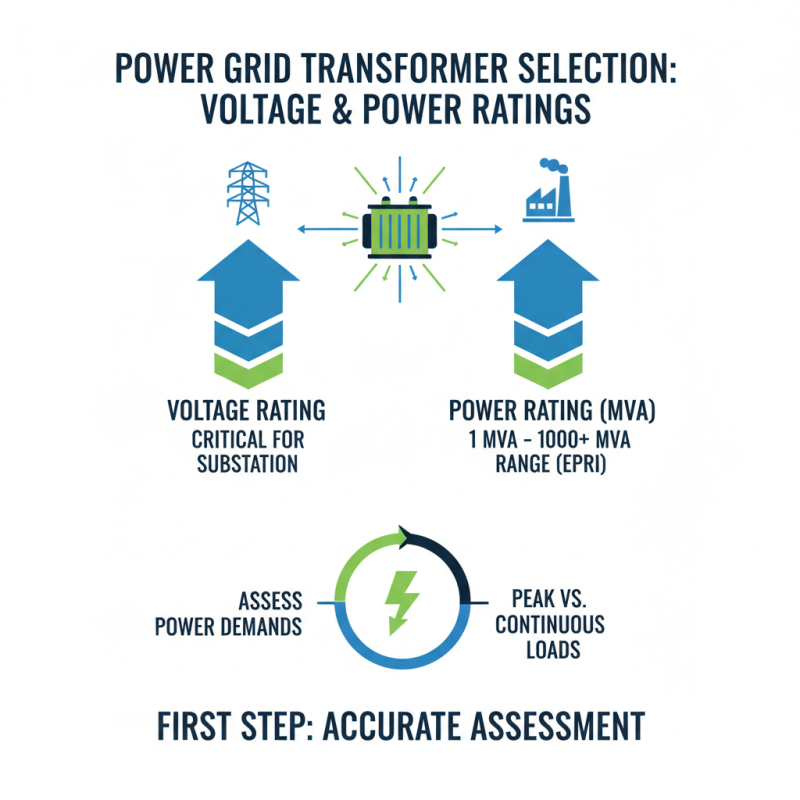
Choosing the right power grid transformer is critical for any Power Grid Substation. Understanding the required voltage and power ratings is the first step in this selection process. According to the Electric Power Research Institute, transformer ratings usually range from 1 MVA to over 1000 MVA. This variance is crucial. You need to assess your facility's power demands accurately, considering both peak and continuous loads.
Voltage ratings also play a significant role. The typical voltage for medium voltage transformers is between 1 kV and 36 kV. For instance, a Power Grid Substation requiring a 12 kV transformer should avoid oversizing. An oversized transformer can lead to energy losses due to no-load and stray losses. This not only affects efficiency but also increases operational costs. The IEEE Standards recommend transformers align closely with operational voltage needs.
Moreover, the capability to handle voltage fluctuations is a factor that often goes overlooked. Transformers should be rated with a tolerance to accommodate transient overvoltages. This can prevent costly outages or equipment malfunctions. Reports show that improper sizing or voltage rating can lead to up to 30% inefficiencies in energy transfer. Pay attention to these aspects to ensure reliability and performance in your power distribution network.
Evaluating Energy Efficiency and Operational Costs
When choosing a power grid transformer, evaluating energy efficiency and operational costs is crucial. According to a 2022 report by the International Energy Agency (IEA), grid losses can account for 6-8% of total energy consumption. This highlights the importance of selecting transformers that minimize these losses. It's beneficial to assess the efficiency ratings of various models. Higher efficiencies reduce energy waste and operational costs over time.
Consider the type of load your transformer will support. For instance, the GGD Series Photovoltaic Grid-Connected Cabinet is designed for renewable energy applications. Its efficiency features can significantly impact long-term savings. Ensuring proper sizing also matters. An oversized transformer may lead to inefficiencies, raising both energy costs and maintenance needs.
Tips: Always request efficiency documentation from suppliers. Look for transformers with high-performance ratings. Regularly monitor your system’s performance to make adjustments as necessary. Over time, this proactive approach can save you money and enhance reliability. One report showed that properly maintained transformers can improve their lifespan by 20%, contributing to overall operational efficiency.
Power Grid Transformer Energy Efficiency and Operational Costs
Importance of Manufacturer Reputation and Support
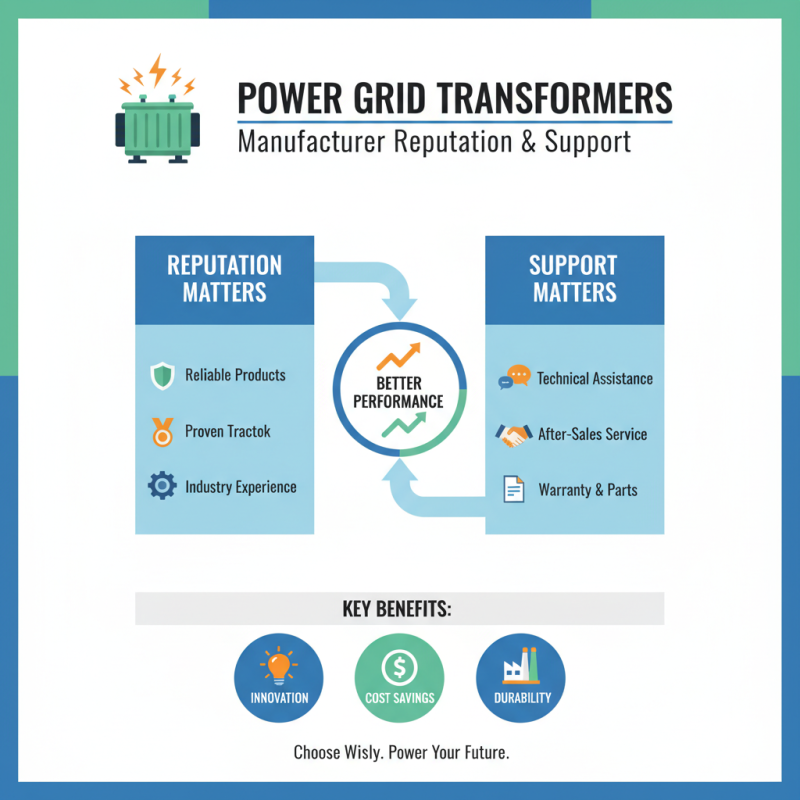
Choosing the right power grid transformer can significantly impact performance. One vital aspect to consider is the manufacturer’s reputation. A manufacturer with a strong track record often indicates reliable products. Their experience in the industry can bring valuable insights to your project.
When assessing manufacturers, consider their history and customer feedback. A reputable company often has transparency in its processes. They provide detailed documentation and support. This can ease maintenance and future upgrades. Engaging with experienced professionals can enhance your understanding and help avoid costly mistakes.
Here are some tips. Look for manufacturers that offer comprehensive customer support. Prompt assistance can save time and resources. Check for testimonials from previous clients. Real experiences can provide insight into reliability and service quality. Finally, evaluate the certifications that the manufacturer holds. They should meet industry standards to ensure safety and effectiveness, especially when integrating equipment like GGD Grid-connected Switchgear.
Installation and Maintenance Considerations for Transformers
When considering the installation of a power grid transformer, attention to detail is vital. Proper site preparation is essential. Ensure the area is accessible for both installation and maintenance. Verify that there’s sufficient space around the transformer. Safety regulations should not be overlooked. Improper site selection can lead to complications later.
**Tips:** Always double-check installation plans. Consult with professionals to confirm your layout meets all codes.
Maintenance is another critical aspect. Regular inspections can prevent unexpected failures. Look for signs of wear and tear, such as unusual noises or leaks. Setting up a routine maintenance schedule helps ensure longevity. Don't underestimate the importance of documentation. Keep records on repairs, inspections, and any replacements.
**Tips:** Consider using the GGD Photovoltaic Grid-Connected Complete Equipment for better efficiency. It can simplify monitoring and enhance performance.
Remember, even experienced teams can overlook small details. A minor oversight can lead to significant issues in the future. Reflect on past installations. What could have been done better? Continuous improvement is key in this field.
Exploring the Advantages of the Durable LZZBW-10 Outdoor Current Transformer for 10kV/12kV Power Distribution Solutions
The LZZBW-10(12) outdoor current transformer presents a robust solution for power distribution networks operating at 10kV and 12kV. Crafted with a high-quality, weatherproof epoxy resin casting, this transformer ensures exceptional durability, capable of withstanding harsh environmental conditions. With an operational altitude limit of 3500 meters above sea level, it is ideally suited for various outdoor applications, making it a reliable choice for professional installations.
Furthermore, the versatility of the LZZBW-10(12) is enhanced by its current ratio range from 5A to 1500A, allowing for tailored configurations to meet specific project demands. This flexibility is particularly beneficial for engineers and technicians who require precise control over their electrical systems. With an integrated accuracy class combination of 0.2S/0.5/10P/10P, the transformer is designed for accurate metering and measurement, as well as dual protection functions, ensuring optimal performance in critical operations. Trusting in expertly engineered solutions like the LZZBW-10(12) guarantees enhanced reliability and efficiency in power distribution systems.
FAQS
: They convert voltage levels for efficient electricity transmission and distribution.
Proper sizing prevents energy waste and costly issues like overheating.
It wastes energy and increases operational costs unnecessarily.
It could lead to energy losses of up to 10%, wasting resources.
Key types include power transformers, distribution transformers, and autotransformers.
This transformer lowers voltage levels for safe local electricity distribution.
No, they lack galvanic isolation, raising potential safety concerns.
Assess their reputation, customer feedback, and certification standards.
Experts help avoid costly mistakes and provide valuable insights.
Comprehensive assistance and transparency can ease maintenance and upgrades.
Conclusion
Choosing the right Power Grid Transformer is crucial for ensuring efficient and reliable energy distribution. To make an informed decision, it is essential to first understand the basics of power grid transformers, including their types and specific applications. Key factors to consider include the required voltage and power ratings, as well as the energy efficiency and operational costs associated with different transformer options.
Additionally, the reputation and support of the manufacturer play a vital role in long-term performance and satisfaction. Installation and maintenance considerations are also important, as they can impact the overall reliability and lifespan of the Power Grid Transformer. By carefully evaluating these aspects, you can select a transformer that best meets your energy needs while optimizing performance and cost-effectiveness.