

China’s switchgear sector really caters to a wide range of projects—including utility, industrial, commercial, and renewable energy ones. But, honestly, choosing the right supplier isn’t just about looking at rankings; it’s more about how the product fits your specific needs. Buyers usually compare things like voltage ratings, fault handling performance, testing records, delivery times, and after-sales support — those small details can really make a difference.
According to the International Energy Agency’s Electricity 2024 report, we’re expecting global electricity demand to grow around 3.4% per year from 2024 through 2026. That’s likely to put ongoing pressure on power grids and distribution systems everywhere. But that doesn’t necessarily mean every segment of switchgear, or every manufacturer, will grow at the same rate — and that’s an important point to keep in mind. A market forecast isn’t the same as a product certification, after all.
This guide will introduce you to some well-known Chinese manufacturers and suppliers like China XD Group, CHINT, TBEA, and Sieyuan Electric. We’ll look at what kind of products they offer, their experience on real projects, and what documents you should double-check when making a decision. For the technical side, standards like IEC 62271 cover high-voltage switchgear, while IEC 61439 deals with low-voltage switchgear assemblies. It’s crucial to verify which standard applies and to ask for proof of testing — just taking their word for it isn’t enough. Also, don’t forget to inquire about factory acceptance tests, spare parts availability, and how quickly they respond to service issues. A slick catalog can sometimes hide gaps in practicality, so not every supplier will be the right fit.
Ultimately, your best shortlist should be based on your actual voltage requirements, environmental conditions, and maintenance needs. Plus, always double-check current certificates and references, because a company’s product range and capabilities can change over time. It’s all about doing your homework to find the best match for your project’s unique requirements.
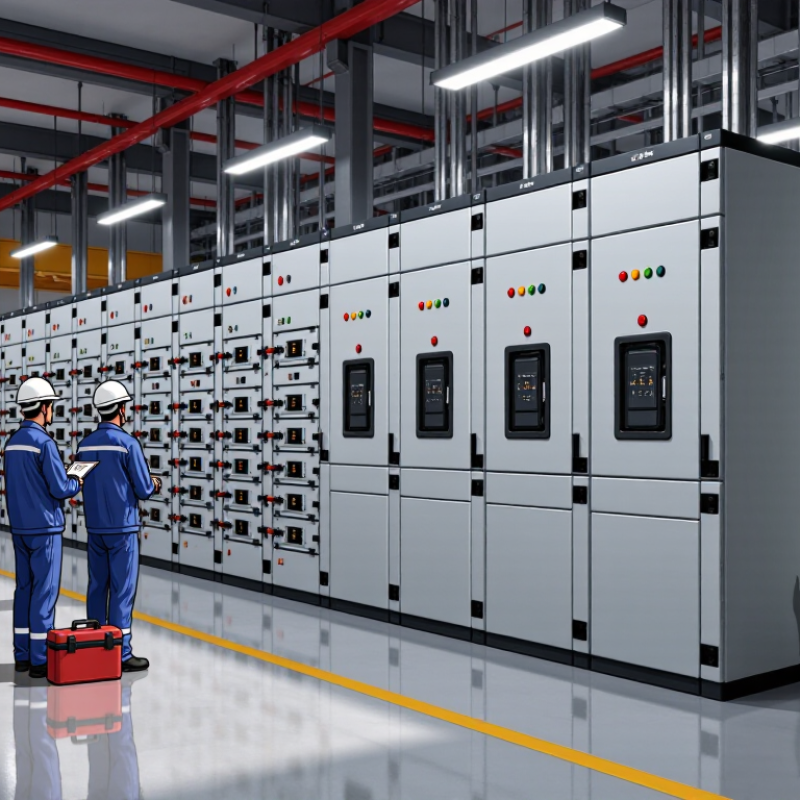
China’s switchgear suppliers should be compared against the correct voltage class, not just product labels. IEC 61439-1:2020 covers low-voltage assemblies rated up to 1,000 V AC or 1,500 V DC. IEC 62271-1:2017 covers AC switchgear and controlgear above 1,000 V. These limits come from the standards’ published scopes. The distinction matters: a panel tested for one class does not automatically meet requirements for another.
For a factory line using 400 V distribution, request IEC 61439 design-verification evidence and routine-test records. Check the nameplate. For a medium-voltage feeder, ask for the applicable IEC 62271 test documentation, rated voltage, and short-circuit withstand rating. An Rmu Switch installation also needs clear information on insulation, operating conditions, and maintenance access. Small details matter: a cramped cable compartment can complicate field work.
When assessing Chinese manufacturers and suppliers, compare the declared ratings with the project’s actual load and site conditions. Ask who performed the tests, which configuration was tested, and whether the supplied unit matches it. IEC scope data sets the boundary, but it does not prove every product’s performance. A standard label alone still leaves questions. Documentation can be incomplete, and buyers should verify it rather than assume equivalence.
China’s medium-voltage switchgear market spans a wide product class. GB/T 3906 applies to AC metal-enclosed switchgear and controlgear rated above 3.6 kV and up to 40.5 kV. That range covers equipment used in substations, industrial plants, and distribution networks. Check the exact edition and project specification before comparing suppliers. Small details matter.
Selection should start with rated voltage, insulation level, and short-time withstand current—not cabinet appearance. A Ring Main Switch for a compact substation may face different operating needs from feeder gear in a large plant. The IEA’s Electricity 2024 report projected global electricity demand growth averaging 3.4% annually from 2024 to 2026, supporting continued investment in grid equipment. But demand growth alone does not determine the right specification. Fault levels, ambient temperature, installation space, and maintenance access all affect performance. Even a compliant design can disappoint if site conditions are overlooked. Ask for type-test evidence, routine-test records, and clear drawings; paperwork deserves careful review, too.
| Rated Voltage Class | Common System Application | Typical Product Configuration | Typical Rated Busbar Current | Common Short-Time Withstand Ratings | Typical Installation |
|---|---|---|---|---|---|
| 3.6 kV | Medium-voltage distribution systems within the standard’s voltage scope | Metal-enclosed switchgear; air-insulated or gas-insulated designs are available | 630–2,500 A | 20, 25 or 31.5 kA for 1 s or 3 s, depending on design | Industrial distribution rooms and auxiliary power systems |
| 7.2 kV | Medium-voltage networks and industrial power distribution | Metal-enclosed assemblies, commonly with withdrawable or fixed switching devices | 630–3,150 A | 20, 25 or 31.5 kA for 1 s or 3 s, depending on design | Factories, utility substations and commercial facilities |
| 12 kV | Common distribution voltage class for indoor medium-voltage systems | Air-insulated metal-clad or gas-insulated metal-enclosed switchgear | 630–4,000 A | 20, 25, 31.5 or 40 kA for 1 s or 3 s, depending on design | Distribution substations, industrial plants and infrastructure projects |
| 24 kV | Higher-voltage distribution networks and primary distribution applications | Metal-enclosed assemblies designed for the applicable insulation level | 630–2,500 A | 20, 25 or 31.5 kA for 1 s or 3 s, depending on design | Utility and industrial substations |
| 40.5 kV | Upper voltage class covered by GB/T 3906 | Metal-enclosed switchgear, including air-insulated and gas-insulated product designs | 630–3,150 A | 20, 25, 31.5 or 40 kA for 1 s or 3 s, depending on design | Primary distribution substations and large industrial installations |
GB/T 3906 applies to AC metal-enclosed switchgear and controlgear in the 3.6 kV to 40.5 kV range. Current and short-time withstand values shown are typical configurable ratings, not requirements for every product; confirm the applicable specification, insulation level and test documentation for each project.
When comparing China top switch gear manufacturers and suppliers, begin with the network’s rated voltage. A 12 kV system and a 40.5 kV system are not interchangeable choices. Check the equipment’s maximum operating voltage and insulation levels against the project specification. For a Medium Voltage Switch, ask suppliers to state these values clearly, not just provide a product range.
Continuous current rating should reflect the actual load, expected expansion, and installation conditions. A rating that looks generous on paper may not suit a hot enclosure or limited ventilation. Small details matter. Compare short-time withstand current, its duration, and peak withstand current; these describe different stresses during a fault. Confirm that the stated figures match the switchgear configuration being quoted.
Request type-test evidence and technical schedules for the exact ratings under review. Then compare the assumptions behind each offer, including ambient temperature and installation conditions. This comparison is not always tidy. A higher fault rating can add cost without helping a network that does not require it, while an overlooked fault level can create a serious mismatch. Ask suppliers to explain any gaps between their standard configuration and the project’s required voltage, current, and fault levels.
China’s leading switchgear suppliers serve different points in the power chain, from high-voltage transmission yards to compact distribution rooms. Compare manufacturers by voltage range, insulation design, protection systems, and tested fault capacity—not catalogue size alone. The IEA’s Electricity Grids and Secure Energy Transitions report says annual grid investment must rise from about USD 300 billion to over USD 600 billion by 2030. That expansion raises demand for dependable equipment, but it does not prove any supplier’s performance.
For a shortlist of major Chinese producers, request type-test reports, factory quality records, and references for projects with similar voltage and climate conditions. Check whether drawings specify clearances, operating mechanisms, and spare-part availability. A neat datasheet is useful, but it cannot show how a breaker behaves after years of dust, heat, or repeated switching. That gap deserves attention.
Tips: Ask for test documents tied to the exact model and configuration. Confirm delivery dates, commissioning support, and local service arrangements in writing. Compare total lifecycle cost, not just the quoted unit price. A lower bid may still be sensible; verify the assumptions before deciding.
China’s switchgear suppliers serve very different project needs. Utility networks often require medium- or high-voltage equipment, coordinated protection, and clear maintenance access. The International Energy Agency’s Electricity Grids and Secure Energy Transitions (2023) estimates annual grid investment must rise from about USD 300 billion to over USD 600 billion by 2030. That expansion makes dependable delivery and documented testing important, not just a competitive quotation.
Industrial buyers may prioritize motor control, process continuity, and equipment suited to dust, heat, or moisture. Renewable projects need switchgear compatible with changing generation and storage arrangements. IRENA’s Renewable Capacity Statistics 2024 reports 473 GW of renewable capacity added worldwide in 2023. Building projects, by contrast, often focus on compact panels, straightforward operation, and coordination with backup power. There is no universal best configuration. A specification can look complete on paper yet overlook installation space or future expansion; that deserves a second review.
Tips: Share the one-line diagram, voltage, fault level, and site conditions before comparing suppliers. Ask for routine test records, component documentation, and lead-time details. Details matter. Verify project-specific requirements with a qualified engineer.
China’s switchgear suppliers should be assessed against the actual conditions at the installation site. Request type-test reports for the proposed equipment configuration, not just a similar product in the same range. Check test scope, rated voltage, current, and short-circuit performance. These details matter. For an Outdoor post switch, verify the specified IP rating against exposure to dust, rain, and site cleaning. An IP number alone does not describe every operating condition.
Tips: Ask for full test reports and confirm model references. Compare the declared IP rating with the enclosure drawing and cable-entry design. Check that certificates are current and issued for the equipment being offered. Small mismatches are easy to miss.
Service coverage deserves equal attention. Ask who handles commissioning, spare parts, and urgent fault support in your region. Confirm response times in writing, and request examples of service arrangements for comparable installations. A polished document is reassuring, but it cannot show how quickly help arrives after a failure. Site conditions can also reveal gaps that a supplier review overlooked, so leave room to reassess after installation.
The 2023 report *Electricity Grids and Secure Energy Transitions* estimates that more than 80 million kilometres of electricity networks must be added or refurbished worldwide by 2040 to meet climate and energy goals. It also warns that annual grid investment needs to rise to more than US$600 billion by 2030. These figures highlight the importance not only of expanding networks, but also of maintaining equipment safely as substations and switchgear support increasingly complex power systems. Reliable isolation points help crews carry out inspections and maintenance while reducing exposure to energized circuits.
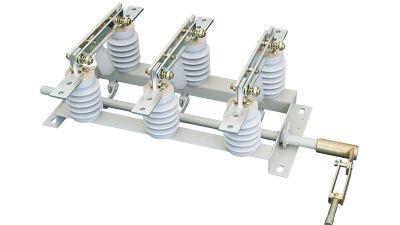
Designed for indoor 12 kV, 50 Hz systems, the GN19-12 disconnecting switch provides visible isolation and is operated manually through a CS6-1 mechanism. It is intended to make and break circuits under no-load conditions, while withstanding high voltage; it is not a load-breaking switch. For substations and switchgear, this distinction helps define safe operating procedures and appropriate equipment selection. Available variants for pollution-prone or high-altitude environments, as well as electrified display options, allow the switch to be matched to different installation needs. Its robust construction supports secure maintenance isolation across a range of operating conditions.
It applies to AC metal-enclosed switchgear rated above 3.6 kV and up to 40.5 kV.
Compare rated voltage, insulation level, and short-time withstand current. Cabinet appearance alone tells little.
Fault levels, ambient temperature, available space, and maintenance access all matter. A drawing can miss a tight service aisle.
Request type-test reports for the exact model and configuration, plus routine-test records and clear drawings. Check the details.
Compare the stated rating with the enclosure drawing, cable entries, and exposure to dust, rain, or site cleaning.
Confirm commissioning help, spare-part access, regional support, and written response times. Ask for examples from similar installations.
Not always. Compare lifecycle costs, delivery dates, service coverage, and the assumptions behind each quotation.
References from similar voltage and climate conditions can reveal practical concerns. Still, past performance cannot guarantee a perfect fit.
Choosing Switch Gear for a Chinese project begins with matching the equipment to its voltage range, application, and applicable standards. IEC 61439 is relevant to low-voltage assemblies below 1 kV, while IEC 62271 addresses equipment above 1 kV. For medium-voltage metal-enclosed switchgear, GB/T 3906 covers ratings from 3.6 kV to 40.5 kV. Buyers should compare nominal voltage, continuous current, and short-circuit withstand capability, paying particular attention to common 12 kV and 40.5 kV systems.
Supplier selection should reflect the demands of the project, whether it serves a utility network, industrial facility, renewable-energy installation, or building. Review independent type-test evidence, enclosure IP ratings, required certifications, manufacturing quality, and the availability of installation support, spare parts, and after-sales service. A careful comparison of technical fit and service coverage can help reduce project risks and ensure the equipment performs reliably throughout its expected operating life.