
Leave Your Message
0%

Global power projects almost never run under the same conditions. One transmission site might be baking in desert heat, another could be sitting in coastal salt air, and another might get hammered by heavy rain or freezing winds. So when it comes to picking equipment, it’s really a practical engineering call. A Power Grid Transformer has to line up with the project’s voltage, frequency, load profile, insulation level, and any plans for future expansion. And on top of that, it’s gotta fit the local install limits, the transport routes, and what the maintenance folks can actually handle.

When you talk to seasoned utility engineers, they’re not just going to flip through a product brochure. They’ll dig into the design calculations, routine test reports, type-test evidence, material traceability, and factory acceptance procedures. And if you want a bit more peace of mind before shipment, independent inspections can help. On international projects, you might also need to line things up with IEC or IEEE practices—and, of course, whatever local grid rules apply. Protection systems, cooling, noise limits, fire safety, monitoring devices—they all deserve just as much attention, honestly. It’s the little things that get you. A lifting point that wasn’t planned well? That can set installation back for days. And a weak spare-parts plan? Well, that can make a later outage drag on even longer.

At the end of the day, a reliable power grid transformer needs to keep running steadily—and still be serviceable when real-world conditions get messy. Digital temperature monitoring and dissolved-gas analysis are great for spotting faults as they start to develop. But let's be clear: monitoring isn't a substitute for experienced inspection or disciplined maintenance. That's a point people tend to miss. Truth is, no transformer is perfect, and every spec comes with trade-offs—cost, efficiency, size, resilience, you name it. Good suppliers don’t pretend there’s one perfect answer that works everywhere. Instead, they’re upfront about the trade-offs. And for global projects? The best bet is usually a mix: engineering you can verify, documentation that’s clear and transparent, local technical support, and a lifecycle plan that’s actually realistic. That combo helps project owners keep the grid stable, manage risk, and build infrastructure they can count on—no matter the market.
Why Choose a Power Grid Transformer for Global Projects?

What Is a Power Grid Transformer?

A power grid transformer is a static electrical device that changes voltage levels through electromagnetic induction. It raises voltage for efficient transmission and lowers it for safe distribution. The process reduces energy losses across long distances. No moving parts are required.

Inside the tank, insulated windings surround a magnetic core. Oil or another approved insulating medium helps control heat and withstand electrical stress. Cooling radiators release heat during heavy operation. Monitoring equipment measures temperature, oil condition, pressure, and winding performance. Small details matter. A loose connection can create abnormal heat, noise, or failure.

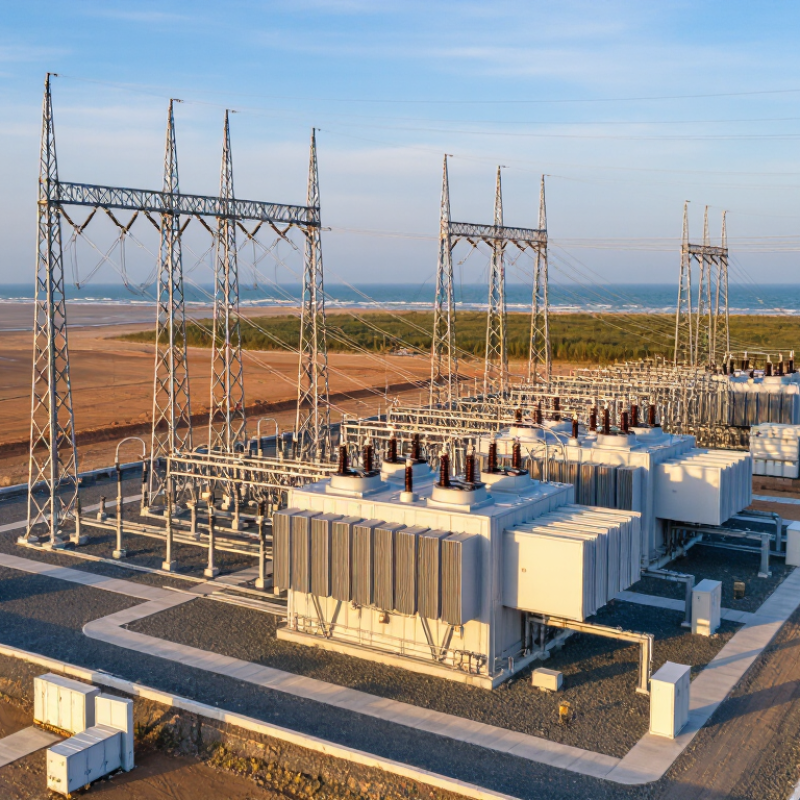
In a Power Grid Substation, the transformer connects transmission lines with regional or local networks. Engineers select its capacity, voltage ratio, impedance, cooling method, and protection system according to the project environment. Humid coastlines, dusty deserts, and freezing regions demand different designs and maintenance plans. Transport also requires careful route surveys because a large transformer may weigh many tons. Field experience shows that factory test records are valuable, but they cannot replace site inspections. I have seen planning assumptions fail when soil conditions, access roads, or unexpected load growth were ignored. Standards and calculations guide decisions, yet real operating data should challenge them when necessary.

How Power Grid Transformers Support Global Energy Networks

Power grid transformers do more than raise or reduce voltage. They connect power plants, substations, and distant communities across uneven networks. In global projects, engineers match transformer ratings to climate, frequency, load cycles, and grid stability needs. A unit in a coastal station faces salt air, while an inland unit may endure dust and extreme heat. These details influence insulation, cooling, enclosure design, and service intervals. Field experience shows that a technically sound design can still fail when transport routes or local skills are overlooked.

Reliable energy networks depend on controlled voltage and predictable power flow. Transformers limit losses during long-distance transmission and support safer distribution near homes and factories. Protection systems, factory testing, oil analysis, and documented commissioning improve confidence. Independent inspection also matters. For reactive power control, an HV Series Reactor for Power Grid can reduce voltage rise and stabilize lightly loaded lines. Its selection requires studies of fault levels, harmonics, switching behavior, and future demand. No calculation is perfect. Engineers should review operating data after commissioning and adjust maintenance plans when evidence changes.

Tips: Confirm grid codes, transport limits, spare-part access, and emergency procedures before procurement. Ask for heat-run results, insulation records, and clear acceptance criteria. Keep monitoring simple, with alarms operators can understand quickly. A missed sensor trend may reveal trouble earlier than a dramatic failure.

Key Technical Features for Cross-Border Projects

Why Choose a Power Grid Transformer for Global Projects?

Key Technical Features for Cross-Border Projects

A power grid transformer must match more than the project voltage. It must suit local grid codes, frequency, insulation levels, and operating conditions. Many international systems use 50 Hz, while others require 60 Hz. That difference affects core design, losses, cooling, and protection settings. Small details matter. Engineers should confirm these requirements before manufacturing begins.

On cross-border projects, an on-load tap changer helps control voltage during changing load conditions. A sealed monitoring system can track oil temperature, winding temperature, gas levels, and moisture. These measurements support safer maintenance and reduce unexpected outages. Transformers may also need reinforced insulation for lightning exposure, coastal humidity, desert dust, or high-altitude operation. One design rarely fits every location. Climate data must guide the specification.

Transport planning is equally important. A large transformer may travel by ship, rail, and road before reaching its substation. Shock recorders, lifting points, and dimensional checks help protect the unit during handling. Factory acceptance tests should verify losses, ratio, impedance, insulation, and partial discharge performance. Site tests then confirm installation quality. Documentation should use clear technical language and include drawings, test records, spare parts, and maintenance procedures. A specification can look complete and still miss local approval requirements. That gap is costly. Experienced project teams review the design with utility engineers, transport specialists, and field technicians before the final purchase decision.

Why Reliability Matters in Diverse Operating Environments

Why Choose a Power Grid Transformer for Global Projects?

Reliability matters when equipment operates across deserts, coastlines, mountains, and crowded industrial zones. A power grid transformer must tolerate heat, humidity, dust, vibration, and unstable voltage conditions. In commissioning work, small details often decide long-term performance. Cable joints, cooling paths, and protection settings deserve careful inspection. One overlooked connection can create unnecessary downtime.

Engineers should evaluate insulation levels, temperature rise, altitude, frequency, and local grid requirements before selecting a transformer. A unit designed for a cool inland site may struggle near salt-heavy coastal air. In dry regions, dust can restrict ventilation and accelerate surface contamination. In high-altitude locations, reduced air density affects cooling and insulation clearances. These conditions are not theoretical. They appear during testing, maintenance, and emergency response.

The transformer should also integrate smoothly with monitoring systems and photovoltaic equipment. A GGD Series Photovoltaic Grid-Connected Cabinet can support organized power distribution and protection when properly matched with the project design. Clear labeling, accessible inspection points, and reliable alarms help technicians work safely under pressure. Remote monitoring adds useful visibility, but it cannot replace physical inspections. That assumption needs challenging. Sensors may miss loose terminals, blocked vents, or moisture inside an enclosure. Practical reliability comes from tested components, documented procedures, skilled installation, and maintenance adapted to the local environment.

How Standards and Regulations Shape Transformer Selection

Why Choose a Power Grid Transformer for Global Projects?

Standards and regulations strongly influence transformer selection across international projects. A transformer that performs well in one country may fail another grid’s requirements. Engineers usually review IEC 60076, IEEE C57, or equivalent national standards. These documents define insulation levels, testing methods, temperature rise, efficiency, and short-circuit performance. Local grid codes may add voltage tolerances, frequency limits, noise controls, and protection requirements. Environmental rules can also affect cooling systems, fire safety, and insulating materials.

Tips: Confirm the destination grid data early. Check voltage, frequency, altitude, ambient temperature, and fault levels. Request routine and type-test records before approval. Keep certification files organized. Small documentation gaps can delay shipment or energization.

Experienced project teams also examine installation realities. A coastal site may require stronger corrosion protection. A high-altitude station may need derating adjustments. Urban substations often face strict noise limits. Transport dimensions matter too, especially when bridges, tunnels, or narrow roads limit delivery. These details sound ordinary, but they frequently change the final design. A spreadsheet cannot capture every site risk. Engineers should verify assumptions with utilities and independent inspectors. Regulations are essential, yet they are not always perfectly aligned. Sometimes, the safest choice exceeds the minimum legal requirement. That decision should be documented with test evidence, lifecycle costs, and clear technical reasoning.

Why Choose a Power Grid Transformer for Global Projects? - How Standards and Regulations Shape Transformer Selection

Selection Dimension Typical Requirement or Reference Representative Data How It Shapes Transformer Selection Project Verification Point
Grid Voltage Transmission and subtransmission voltage class Common project classes include 66 kV, 110 kV, 132 kV, 220 kV and 400 kV The highest system voltage determines insulation coordination, bushing rating, clearances, testing levels and the applicable transformer design class. Confirm the highest system voltage, operating voltage, temporary overvoltage and required insulation level with the grid operator.
Power Frequency National or regional grid frequency 50 Hz or 60 Hz Frequency affects core design, magnetic flux density, no-load loss, impedance behavior and compatibility with the connected network. Verify frequency at both the source and load interfaces, especially for interconnection projects and frequency-converter facilities.
Transformer Rating Continuous apparent-power capacity Typical utility units range from approximately 10 MVA to more than 500 MVA The rating must cover normal load, planned growth, emergency loading and the required redundancy strategy without exceeding thermal limits. Review load forecasts, emergency-duration requirements, ambient temperature and cooling-stage performance.
Applicable Product Standard Power transformer design and testing IEC 60076 series or IEEE C57 series, according to the project specification The selected standard influences design terminology, routine tests, type tests, special tests, tolerances and documentation requirements. State one governing standard hierarchy in the purchase specification and define how conflicting requirements will be resolved.
Insulation Coordination Lightning impulse and switching impulse withstand Example IEC insulation levels: 550 kV lightning impulse for a 245 kV class winding; higher system classes require higher withstand levels Insulation levels determine winding arrangement, clearances, test voltage, surge-arrester coordination and transportation constraints. Coordinate transformer withstand levels with system studies, arrester protective levels and substation insulation coordination.
Cooling System Cooling method and staged capacity ONAN, ONAF, OFAF or equivalent coded cooling arrangements; staged fan or pump operation is common Cooling selection affects available MVA, auxiliary power, noise, maintenance, fire risk and performance during fan or pump failure. Specify the natural-cooling rating, forced-cooling rating, redundancy, control logic and alarm/trip functions.
Temperature Rise Thermal design limit Common IEC liquid-immersed design values include approximately 55 K winding rise and 50 K top-liquid rise, subject to specification Lower temperature rise can improve aging performance but may increase size, weight and cost. Local ambient conditions must be included. Check the specified temperature-rise limits at the declared reference ambient and at the required cooling stage.
Energy Efficiency No-load and load losses No-load loss is present whenever the transformer is energized; load loss increases approximately with the square of current Loss capitalization can materially affect lifecycle cost, particularly for continuously energized grid transformers. Compare guaranteed losses, measurement tolerances, loss evaluation factors and the project’s expected load profile.
Tap-Changing Function Voltage regulation and system control On-load tap changers commonly provide roughly ±10% voltage adjustment, often in 1.25% steps; exact ranges vary Tap range and step size influence voltage control, parallel operation, circulating current and coordination with network protection. Confirm the tap range, neutral position, number of steps, control mode, short-circuit withstand and parallel-operation method.
Short-Circuit Withstand Mechanical and thermal withstand capability Design is based on calculated system fault current and the applicable standard test requirements Higher fault levels can require reinforced windings, stronger clamping structures and more detailed electromagnetic-force calculations. Use the maximum prospective fault current, fault duration and system X/R assumptions in the transformer specification.
Dielectric Liquid Insulating and cooling medium Mineral insulating liquid is widely used; natural or synthetic ester liquids may be selected for fire-safety or environmental objectives Liquid choice affects fire point, biodegradability, clearances, enclosure requirements, maintenance procedures and material compatibility. Verify liquid standards, fire-risk classification, environmental restrictions, fluid compatibility and required acceptance tests.
Fire and Environmental Safety Installation-specific safety requirements Oil containment, drainage, fire separation and acoustic controls may be required by local codes; requirements vary by site Urban, indoor, offshore, seismic and environmentally sensitive sites may require different tank, enclosure, bund and protection arrangements. Complete the local fire, environmental, seismic, noise and construction-code review before finalizing the transformer layout.
Seismic Qualification Mechanical integrity during earthquake loading Qualification may follow project-specific seismic criteria or standards such as IEEE 693, where adopted Seismic requirements can affect anchoring, tank reinforcement, radiator connections, bushings and accessory mounting. Provide site seismic parameters, response spectra, anchorage loads and required qualification evidence in the tender documents.
Noise Emissions Audible sound pressure or power level Limits are commonly specified by contract and local regulation; measured values depend on rating, core design and cooling equipment Noise limits can require low-flux-density core design, vibration isolation, barriers, quieter fans or increased separation distances. Define the measurement method, reference distance, operating condition and maximum permitted noise level.
Routine Factory Tests Tests performed on every completed unit Typical tests include winding resistance, ratio and phase displacement, impedance, load loss, no-load loss, dielectric routine tests and insulation resistance checks Routine-test requirements provide baseline evidence that the manufactured transformer conforms to the approved design and contract data. Agree on test procedures, acceptance tolerances, witness points, calibration requirements and the format of certified reports.
Type and Special Tests Design validation and project-specific verification Possible tests include temperature rise, impulse, sound level, partial discharge, zero-sequence impedance and short-circuit verification Additional tests are selected according to voltage class, network importance, risk profile and the purchaser’s technical specification. Identify mandatory tests at the bidding stage because test facilities, schedule and cost may affect the project plan.
Documentation and Traceability Engineering, manufacturing and commissioning records Typical records include drawings, calculations, material certificates, test reports, manuals, spare-parts lists and inspection records Complete documentation supports regulatory approval, installation, maintenance, warranty assessment and future grid expansion. Specify document language, approval workflow, revision control, data format and required handover milestones.
Logistics and Installation Transportable dimensions and site assembly Large grid transformers may require separate shipment of radiators, conservator equipment, bushings and accessories Shipping height, axle loads, lifting points, oil handling and site assembly conditions can influence the final tank and accessory design. Validate route surveys, bridge limits, lifting capacity, storage conditions, filtration requirements and commissioning resources.
Lifecycle Serviceability Monitoring, maintenance and spare strategy Common monitoring functions include oil temperature, winding temperature, pressure relief, liquid level, dissolved-gas analysis and bushing condition monitoring A transformer with suitable monitoring and accessible components can reduce outage risk and support condition-based maintenance. Define alarm and trip thresholds, communications protocols, spare accessories, oil-sampling points and expected service life.

Evaluating Costs, Maintenance, and Long-Term Project Value

Why Choose a Power Grid Transformer for Global Projects?

Evaluating a power grid transformer requires more than comparing purchase prices. The IEA’s Electricity Grids and Secure Energy Transitions report estimates that annual grid investment must rise from about $300 billion to over $600 billion by 2030. That pressure makes efficiency, availability, and service access financially important. A transformer with lower losses can reduce operating costs across decades, especially where electricity prices fluctuate or renewable generation changes quickly. The cheapest quotation may not be the cheapest asset.

Maintenance planning deserves equal attention. The U.S. Department of Energy’s Transformers and the U.S. Electric Grid report noted that many large power transformers were already 25 years old, with expected service lives near 40 years. That age makes condition monitoring, oil testing, cooling checks, and replacement planning essential. A practical specification should also include spare components, local technician training, and clear fault-response procedures. GGD Grid-connected Switchgear can support coordinated protection, but it still requires correct settings and regular inspection. Small errors become costly.

Global sites add weather, transport, and regulatory risks. Coastal humidity, desert dust, and unstable roads can change the maintenance budget. Field assessments often reveal that logistics cost more than expected. That gap matters. Long-term value should include outage exposure, expected losses, serviceability, and recycling requirements. Engineers should challenge their own forecasts, because load growth rarely follows the original spreadsheet. A robust transformer choice is not perfect; it is adaptable, documented, and easier to maintain when conditions change.

FAQS

What is a power grid transformer?

It is a static device that changes voltage through electromagnetic induction. It has no moving parts. Its core and insulated windings perform the work.

Why does the grid use high voltage?

High voltage reduces energy losses during long-distance transmission. Near homes and factories, transformers lower it for safer distribution.

What parts are found inside a transformer?

Common parts include a magnetic core, insulated windings, an oil-filled tank, radiators, and monitoring equipment. Small connections matter.

How does a transformer manage heat?

Insulating oil carries heat toward cooling radiators. Sensors track temperature and oil condition. Heavy loads can expose weak cooling performance.

What conditions affect transformer design?

Climate, frequency, load cycles, voltage ratio, and grid stability all matter. Salt air attacks equipment. Dust and freezing weather create different problems.

What should engineers check before transporting a large transformer?

They should survey roads, bridges, turning areas, soil, and lifting points. A unit may weigh many tons. Access assumptions can fail.

Which tests support reliable commissioning?

Useful records include heat-run results, insulation tests, oil analysis, and protection checks. Factory documents help. They cannot replace site inspections.

How can operators detect developing problems?

They can review temperature, pressure, oil condition, noise, and winding trends. A missed sensor trend may appear before a major failure.

Why should maintenance plans change after commissioning?

Real operating data may differ from planning assumptions. Load growth, soil conditions, or local skills can change the risk. No calculation is perfect.

Conclusion

A Power Grid Transformer is a vital component that transfers electrical energy between different voltage levels, allowing power to move safely and efficiently from generation facilities to transmission and distribution networks. For global energy projects, it supports cross-border electricity exchange, improves grid stability, and helps integrate renewable sources into increasingly complex power systems. Its design must account for voltage requirements, power capacity, cooling methods, insulation performance, and the ability to operate under varied climates and load conditions.

Reliability is especially important when equipment serves diverse operating environments, where temperature, humidity, transportation challenges, and maintenance resources may differ significantly. International standards and regional regulations influence transformer selection by defining requirements for safety, testing, efficiency, documentation, and environmental performance. Project teams should also assess purchase costs alongside installation, monitoring, maintenance, spare parts, energy losses, and expected service life. A well-selected transformer can reduce operational risks, control long-term expenses, and provide dependable value throughout the project lifecycle.
Henry

Henry

Henry is a dedicated marketing professional with extensive expertise in the electrical equipment industry. Proudly representing a company that boasts unparalleled supply chain advantages, he plays a pivotal role in promoting an impressive portfolio of over 200 series and 25,000 models, which......
Previous What Is a Voltage Substation and How Does It Work?