
Leave Your Message
High-Performance Products for Precise Monitoring Applications
Current transformers (CTs) have become indispensable components in contemporary electrical infrastructure, serving as the cornerstone for accurate current and voltage monitoring across industrial, commercial, and utility applications. These precision instruments transform high-magnitude primary currents into proportionally reduced secondary currents, enabling safe measurement, monitoring, and protection of electrical systems without direct connection to high-voltage circuits.
In today's increasingly complex power distribution networks, the demand for precise current and voltage monitoring has reached unprecedented levels. Current transformers provide the essential interface between high-power electrical systems and sensitive measurement instrumentation, ensuring operational safety while delivering the accuracy required for modern energy management systems. The global current transformer market has experienced substantial growth, driven by expanding power infrastructure, renewable energy integration, and the proliferation of smart grid technologies.
The global current transformer market was valued at approximately USD 2.8 billion in 2023 and is projected to reach USD 4.2 billion by 2030, growing at a CAGR of 5.8%. This growth trajectory reflects the accelerating demand for reliable power monitoring solutions across diverse industrial sectors.
The power generation sector represents the largest application domain for current transformers, accounting for approximately 35% of global demand. Modern power plants—whether conventional thermal, nuclear, or renewable energy facilities—rely extensively on current transformers for critical functions including generator protection, load monitoring, and grid synchronization. The integration of variable renewable energy sources such as wind and solar has intensified the need for precise current monitoring to manage power quality and grid stability.
Transmission and distribution networks utilize current transformers at every voltage level, from high-voltage transmission lines operating at 765kV down to medium-voltage distribution systems at 11kV-33kV. These installations enable utilities to monitor power flow, detect faults, implement protective relaying schemes, and optimize load distribution. The transition toward smart grids has further elevated the importance of current transformers, as they provide essential data for advanced distribution management systems (ADMS) and demand response programs.
Manufacturing facilities across automotive, steel, chemical, and semiconductor industries depend on current transformers for multiple critical functions. In heavy industrial applications, current transformers monitor motor loads, detect equipment malfunctions, and enable predictive maintenance strategies. The precision monitoring capabilities of modern CTs allow manufacturers to optimize energy consumption, reduce operational costs, and minimize unplanned downtime.
Process industries particularly benefit from the integration of current transformers with supervisory control and data acquisition (SCADA) systems. This integration enables real-time monitoring of electrical parameters across distributed manufacturing operations, facilitating immediate response to abnormal conditions and supporting continuous improvement initiatives focused on energy efficiency.
The commercial sector has witnessed rapid adoption of current transformers as building automation systems become more sophisticated. Modern commercial facilities utilize CTs for sub-metering applications, enabling detailed energy consumption analysis by tenant, floor, or equipment category. This granular monitoring capability supports cost allocation, identifies energy waste, and validates the performance of energy conservation measures.
Data centers represent a particularly demanding application environment, where current transformers monitor power distribution to critical IT equipment with exceptional precision. The high power densities and stringent uptime requirements of data centers necessitate continuous monitoring of electrical parameters to prevent overload conditions and ensure optimal power utilization effectiveness (PUE).
The electrical industry is experiencing a fundamental transformation with the emergence of digital current transformers, which represent a paradigm shift from conventional analog technology. Digital CTs incorporate electronic sensors and digital signal processing to output standardized digital communication protocols, particularly IEC 61850, which has become the global standard for substation automation.
These advanced instruments offer significant advantages over traditional current transformers, including enhanced accuracy across wide dynamic ranges, immunity to electromagnetic interference, reduced size and weight, and elimination of saturation risks associated with iron-core designs. Digital CTs facilitate seamless integration with digital protection relays and intelligent electronic devices (IEDs), enabling sophisticated protection schemes and advanced monitoring capabilities that were previously impractical.
Modern CTs achieve accuracy classes of 0.1% or better, supporting revenue metering and precision power quality analysis applications.
Digital technology enables measurement from microamperes to kiloamperes without requiring multiple CT ratios or tap settings.
IEC 61850 protocol support enables plug-and-play integration with modern substation automation architectures.
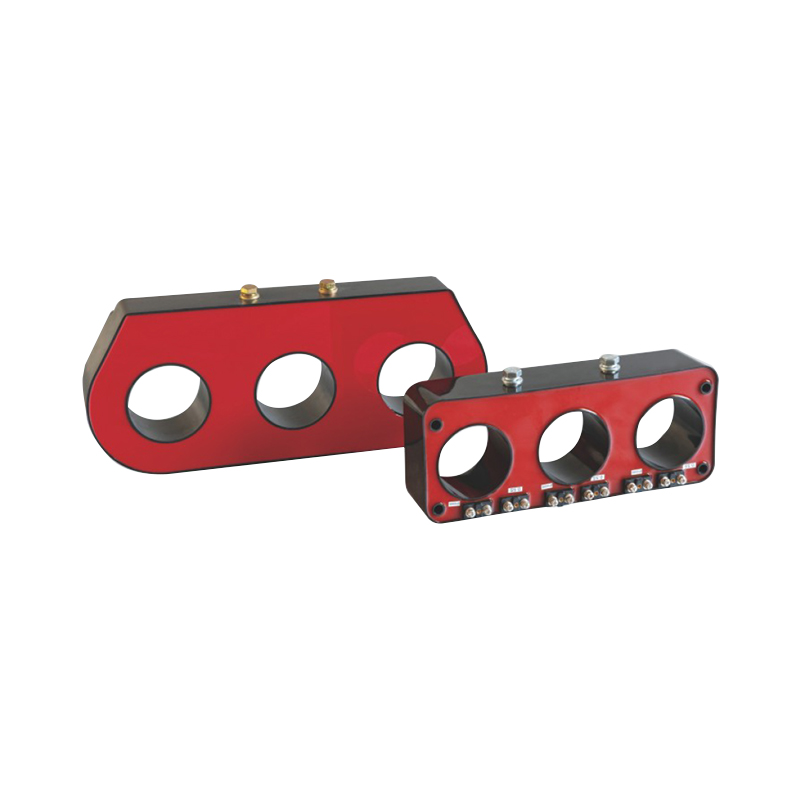
Rogowski coils have gained substantial traction as an alternative to traditional iron-core current transformers, particularly in applications requiring flexible installation, high-current measurement, or immunity to DC saturation. These air-core sensors consist of a helical coil wound on a non-magnetic core, producing an output voltage proportional to the rate of change of the current being measured.
Recent technological advances have addressed historical limitations of Rogowski coils, including temperature sensitivity and low-frequency response. Modern designs incorporate advanced materials, precision winding techniques, and sophisticated signal conditioning electronics to achieve performance comparable to conventional CTs while maintaining the inherent advantages of linear response, absence of saturation, and lightweight construction. The flexibility of Rogowski coils makes them particularly valuable for retrofit installations and temporary monitoring applications where traditional CTs would be impractical.
The convergence of current transformer technology with IoT platforms represents a significant development trajectory that is reshaping electrical monitoring architectures. Modern current transformers increasingly incorporate embedded intelligence, enabling local data processing, anomaly detection, and event classification at the edge of the network. This distributed intelligence reduces communication bandwidth requirements, enables faster response to critical conditions, and supports advanced analytics applications.
IoT-enabled current transformers can communicate wirelessly using protocols such as LoRaWAN, NB-IoT, or industrial wireless standards, eliminating costly wiring infrastructure and enabling monitoring in previously inaccessible locations. Cloud connectivity facilitates centralized data aggregation, machine learning-based predictive analytics, and integration with enterprise energy management systems. This technological evolution is democratizing access to sophisticated electrical monitoring capabilities, making them economically viable for small and medium-sized facilities that previously could not justify traditional monitoring infrastructure.
The rapid expansion of renewable energy generation presents unique challenges for current measurement and monitoring. Solar photovoltaic installations and wind farms introduce variable, bidirectional power flows that differ fundamentally from the unidirectional flows characteristic of conventional generation. Current transformers in these applications must accurately measure currents that vary rapidly in magnitude and may reverse direction as generation exceeds local consumption.
Grid-scale battery energy storage systems (BESS) represent particularly demanding applications for current transformers. These systems charge and discharge at high rates, creating transient conditions that can challenge conventional CT designs. Modern current transformers for BESS applications incorporate wide bandwidth capabilities to accurately capture fast transients, extended dynamic range to measure both charging and discharging currents, and enhanced thermal performance to withstand continuous high-current operation.
Utility-scale inverters that interface renewable generation to the grid rely on current transformers for multiple critical functions including output current control, anti-islanding protection, and power quality monitoring. The presence of high-frequency switching harmonics in inverter output currents necessitates current transformers with extended frequency response characteristics to ensure accurate measurement and protection functionality.
The proliferation of electric vehicles (EVs) is creating substantial demand for current transformers in charging infrastructure applications. DC fast charging stations, which can deliver power levels exceeding 350kW, require high-accuracy current measurement for billing purposes, battery management system communication, and safety protection. Current transformers in these applications must accommodate wide current ranges from trickle charging to maximum power delivery while maintaining revenue-grade accuracy.
Grid impact management represents another critical application for current transformers in EV charging deployments. As multiple charging stations operate simultaneously, utilities and facility managers require detailed monitoring of aggregate load to prevent transformer overloading and voltage regulation problems. Advanced current transformer installations enable dynamic load management systems that optimize charging schedules based on available capacity, electricity pricing, and user preferences.
Current transformers have evolved beyond simple measurement devices to become integral components of predictive maintenance programs. By continuously monitoring motor current signatures, current transformers enable detection of developing mechanical and electrical faults long before catastrophic failure occurs. Motor current signature analysis (MCSA) leverages the detailed current waveform information captured by modern CTs to identify conditions such as bearing wear, rotor bar defects, air gap eccentricity, and load imbalances.
The implementation of predictive maintenance strategies based on current transformer data has demonstrated substantial economic benefits across industrial operations. Case studies document maintenance cost reductions of 25-40% and unplanned downtime reductions exceeding 50% when comprehensive current monitoring programs are implemented. The return on investment for current transformer installations in predictive maintenance applications typically occurs within 12-18 months, making this one of the most compelling business cases for advanced monitoring technology.
The proliferation of non-linear loads including variable frequency drives, switch-mode power supplies, and LED lighting has created power quality challenges that require sophisticated monitoring capabilities. Current transformers designed for power quality applications must accurately reproduce harmonic currents up to the 50th harmonic (2.5kHz for 50Hz systems) while maintaining phase accuracy to enable proper calculation of power factor and harmonic distortion metrics.
Modern power quality monitoring systems utilize current transformers in conjunction with advanced digital signal processing to provide comprehensive analysis of electrical parameters including total harmonic distortion (THD), individual harmonic amplitudes, inter-harmonic content, and transient disturbances. This detailed information enables identification of power quality problems, assessment of compliance with standards such as IEEE 519 and IEC 61000, and evaluation of mitigation measures such as harmonic filters or active power conditioning equipment.
The integration of artificial intelligence (AI) and machine learning (ML) algorithms with current transformer data represents the next frontier in electrical monitoring technology. Advanced analytics platforms can process the vast quantities of data generated by modern current transformers to identify subtle patterns indicative of developing problems, optimize energy consumption, and predict equipment remaining useful life with unprecedented accuracy.
Machine learning models trained on historical current transformer data can detect anomalies that would be imperceptible to traditional threshold-based monitoring systems. These AI-powered systems continuously learn from operational data, adapting their detection algorithms to the specific characteristics of each monitored asset. The result is dramatically reduced false alarm rates and earlier detection of genuine fault conditions, enabling maintenance interventions before equipment damage occurs.
As current transformers become increasingly connected to enterprise networks and cloud platforms, cybersecurity has emerged as a critical consideration. Digital current transformers that communicate using standard IT protocols potentially create attack vectors that could be exploited to disrupt operations, manipulate measurement data, or gain unauthorized access to control systems.
Manufacturers are responding to these concerns by implementing security features including encrypted communication protocols, secure boot processes, digital signatures for firmware updates, and role-based access controls. Compliance with standards such as IEC 62351 for power system information security and NERC CIP for critical infrastructure protection has become essential for current transformers deployed in utility and critical facility applications. Organizations implementing connected current transformer systems must develop comprehensive cybersecurity strategies that address device authentication, network segmentation, intrusion detection, and incident response procedures.
Environmental sustainability considerations are increasingly influencing current transformer design and manufacturing processes. Traditional oil-filled current transformers present environmental risks due to potential oil leaks and end-of-life disposal challenges. The industry is transitioning toward dry-type designs using solid insulation materials that eliminate environmental risks while often providing superior performance characteristics.
Circular economy principles are being applied to current transformer manufacturing, with emphasis on design for disassembly, material recyclability, and product longevity. Manufacturers are implementing take-back programs for end-of-life equipment, recovering valuable materials including copper conductors and rare earth elements used in electronic components. These sustainability initiatives align with corporate environmental goals while often reducing total cost of ownership through extended product lifecycles and reduced disposal costs.
Yueqing Suian Electric Co., Ltd. is a wholly state-owned trading company controlled by Yueqing Liushi Urban and Rural Construction Investment Co., Ltd., with a registered capital of 10 million yuan. It has been deeply involved in the field of electrical product trading. With its solid state-owned background, rich experience in serving central enterprises, and the leading electrical industry ecosystem and location empowerment in China, it is committed to pioneering a new pattern of global electrical trade with the responsibility of a state-owned enterprise, becoming a core partner of the electrical supply chain trusted by global customers, and providing high-standard and reliable electrical products and solutions for overseas markets.
Liushi Town, known as "Zhejiang's No. 1 Industrial Strong Town," achieved a total industrial output value of 106.76 billion yuan in 2024, exceeding 100 billion yuan for two consecutive years and firmly ranking first in Zhejiang Province among the top 1,000 towns in China in terms of comprehensive strength. As a wholly state-owned enterprise, the company, backed by the state-owned capital of the Liushi Town Government, naturally possesses core advantages such as strong financial strength, compliant operation, and strong risk resistance. The company has accumulated extensive cooperative experience in the domestic market, successfully serving numerous leading central enterprises, including China Construction Eighth Engineering Bureau, China Construction Science & Industry Group Co., Ltd., China Construction Second Engineering Bureau, and Sinopec. It has accumulated rich project experience in infrastructure engineering, energy and power, and other fields. Its products and services have passed the stringent standards of central enterprises and possess mature capabilities suitable for large-scale projects and complex scenarios.
Based in Liushi, Yueqing, known as the "Electrical Capital of China" and the "Export Base of Low-Voltage Electrical Appliances in China," the company focuses on core trade in the electrical field. Boasting unparalleled supply chain advantages, it mainly deals in over 200 series and 25,000 models of products, including transformers, high and low voltage electrical equipment, complete sets of electrical equipment, wires and cables, and new energy electrical products. Leveraging state-owned platform resources, the company ensures product quality and supply stability while achieving high cost-effectiveness through the scale effect of industrial clusters, providing diversified product choices for overseas customers. Deeply integrated into the "Belt and Road" initiative, the company excels in connecting with major overseas infrastructure and energy projects, and can provide supporting services for electrical products that meet international standards.
Adhering to the core principles of "integrity as the foundation, compliance as the basis, and win-win cooperation as the way," Yueqing Sui'an Electric Co., Ltd. builds a solid foundation for cooperation with the credibility of a state-owned enterprise, ensures product quality with the service experience of a central enterprise, empowers global competitiveness with the advantages of industrial clusters, and connects overseas markets with professional services. Leveraging the "Electrical+" strategy of Liushi Town and the benefits of six emerging industrial parks, the company collaborates with global partners to build an international trade network, empowering the development of the global electrical industry with the quality of a state-owned enterprise, and is committed to becoming a trustworthy international electrical trading partner.
Yueqing Suian Electric Co., Ltd.









Comprehensive Solutions for Every Monitoring Application