
Leave Your Message
A distribution transformer for industrial substation power supply is a critical piece of electrical infrastructure that steps down high-voltage electricity from transmission lines to usable voltage levels for industrial facilities, manufacturing plants, data centers, mining operations, and large commercial complexes. Operating typically in the range of 6kV to 35kV on the primary side and stepping down to 400V or 690V on the secondary side, these transformers serve as the backbone of every modern industrial power system.
Unlike general-purpose utility transformers, industrial substation distribution transformers must meet far more stringent performance requirements: continuous heavy-load operation, resistance to voltage fluctuations caused by large motor starts, tolerance of harmonic distortions from variable frequency drives (VFDs), and the ability to withstand the mechanical and thermal stresses of demanding industrial environments.
Key Insight: According to global energy statistics, industrial and commercial sectors account for over 65% of total electricity consumption worldwide. Distribution transformers are the decisive link between the grid and the production floor — their efficiency, reliability, and longevity directly impact operational costs, safety, and carbon footprint across every industry.
The global distribution transformer market was valued at approximately USD 22.5 billion in 2023 and is projected to exceed USD 38 billion by 2032, growing at a CAGR of over 6%. This growth is fueled by accelerating industrialization in emerging markets, the global push for grid modernization, and the explosive demand driven by renewable energy integration, electric vehicle (EV) charging infrastructure, and data center expansion.
China remains the world's largest producer and consumer of distribution transformers. Regions like Yueqing, Zhejiang — home to the "Electrical Capital of China" — have developed world-class manufacturing ecosystems capable of producing high-specification industrial substation transformers at scale, meeting both domestic and international demand. Chinese manufacturers now supply transformers to over 100 countries, participating actively in Belt and Road infrastructure projects across Southeast Asia, Africa, the Middle East, and Latin America.
In the industrial substation segment specifically, demand is driven by:
• Heavy Industry Expansion: Steel mills, cement plants, chemical facilities, and petrochemical refineries requiring large-capacity, high-reliability transformer installations.
• Data Center Boom: Hyperscale data centers demanding ultra-low-loss, high-efficiency transformers with near-zero downtime requirements.
• Renewable Energy Projects: Wind and solar farms requiring step-up/step-down transformers for grid connection.
• EV & New Energy Infrastructure: Charging station networks and battery manufacturing plants placing new load demands on distribution systems.
Global regulations are mandating higher efficiency classes. The EU's Ecodesign Directive, China's GB/T 6451 standard, and the US DOE 2016 efficiency regulations are pushing manufacturers toward amorphous core and high-grade silicon steel designs that cut no-load losses by up to 70% compared to conventional transformers.
Integration of IoT sensors, real-time monitoring systems, and AI-driven predictive maintenance platforms is transforming distribution transformers into intelligent grid nodes. Smart transformers can self-diagnose thermal anomalies, load imbalances, and insulation degradation — dramatically reducing unplanned downtime in industrial facilities.
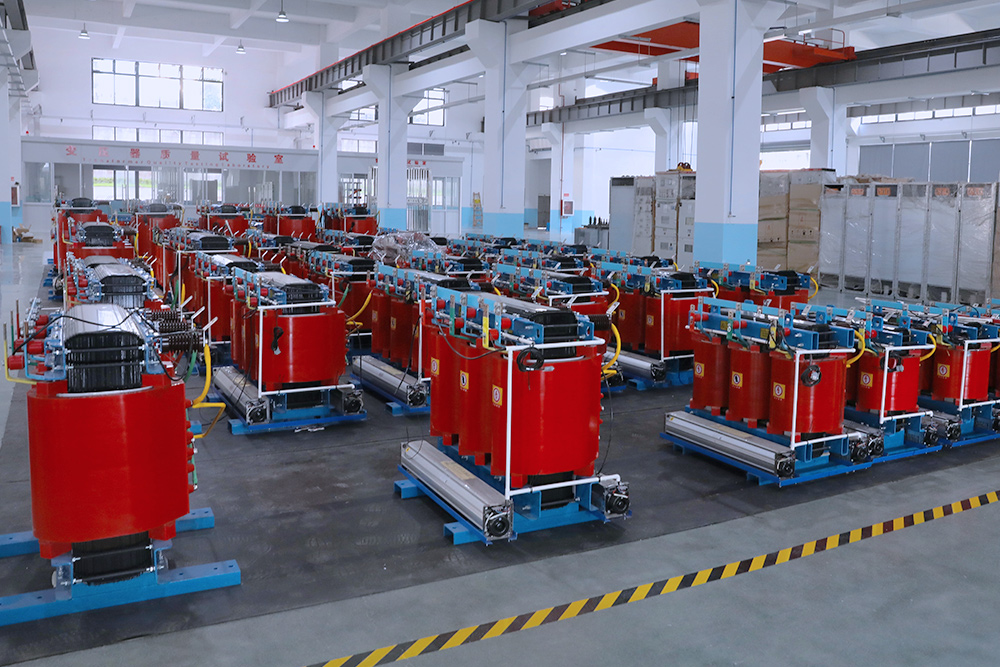
Cast resin dry-type transformers are increasingly preferred for indoor industrial substations due to their fire safety, zero oil-leak risk, and low maintenance requirements. This trend is accelerating in food processing, pharmaceuticals, hospitals, and underground mining operations where environmental and safety standards are paramount.
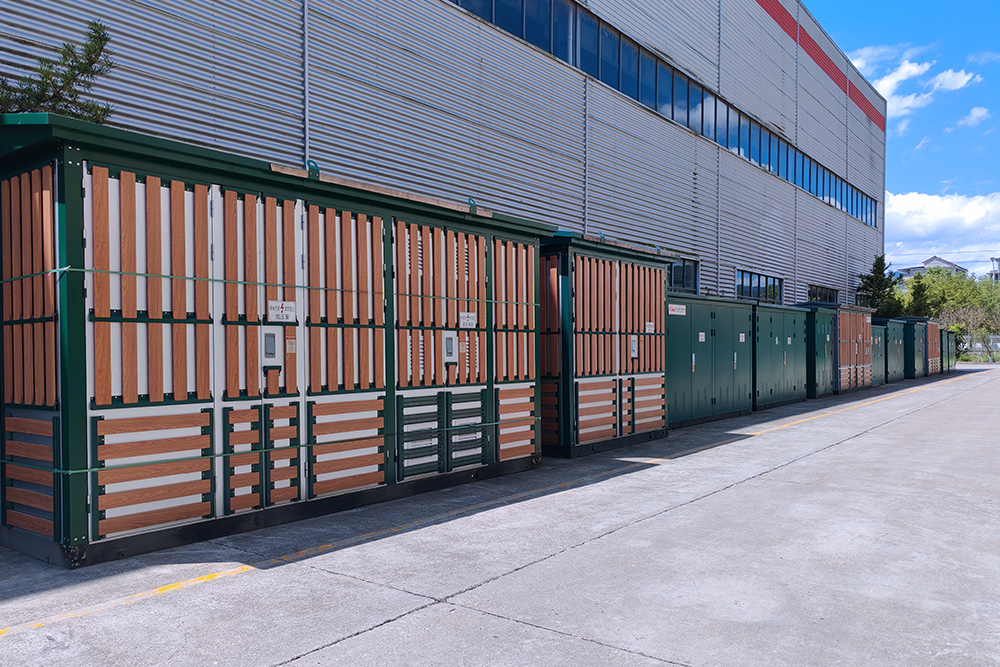
Prefabricated, skid-mounted compact substations integrating the distribution transformer with switchgear and protection systems are gaining rapid adoption. These "plug-and-play" solutions reduce site installation time by up to 60% — ideal for fast-track industrial projects, temporary power solutions, and remote site deployments.
As renewable energy sources proliferate, distribution transformers are being engineered to interface with HVDC transmission systems and bidirectional power flows, supporting the transition to decentralized energy generation and industrial microgrids.
Modern industrial loads — VFDs, UPS systems, rectifiers, arc furnaces — generate significant harmonic distortion. Next-generation industrial substation transformers feature enhanced insulation systems, K-factor ratings, and electromagnetic shielding to maintain performance integrity in highly polluted power environments.
Large-capacity distribution transformers (1600kVA–10MVA) power electric arc furnaces, rolling mills, and induction heating systems. Requirements include ultra-high short-circuit withstand capability, on-load tap changers, and oil-immersed designs with forced cooling systems for continuous 24/7 operation.
Hyperscale data centers demand K-factor rated transformers with extremely low harmonic losses, N+1 redundancy configurations, and ultra-high efficiency (meeting Tier III/IV standards). Distribution transformers here must maintain less than 0.1% voltage deviation under dynamic load switching conditions.
Mining substations require explosion-proof or flame-retardant transformer designs, resistance to vibration and dust ingress (IP54+), and the ability to operate in high-humidity, corrosive environments. Dry-type cast resin transformers are the preferred solution for underground mine electrical systems.
Solar and wind energy projects require distribution transformers capable of handling intermittent, bidirectional power flows with wide voltage variation. Amorphous core transformers with low no-load losses are ideal, as renewable generation assets may run at partial load for extended periods.
Large-scale infrastructure projects — tunnels, bridges, airports, and urban rail transit — deploy temporary and permanent industrial substations. Compact, skid-mounted transformer-substation packages enable rapid deployment, with modular designs allowing capacity expansion as project phases progress.
Hazardous area classification (ATEX/IECEx) demands transformers with specialized enclosures, oil-containment bunding, and pressure relief systems. Sinopec and similar major operators require full lifecycle documentation, factory acceptance testing (FAT), and third-party certification for all substation equipment.
Why Chinese-Manufactured Industrial Distribution Transformers Lead Globally: China's transformer manufacturers — particularly those based in Yueqing and broader Zhejiang Province — have invested heavily in automation, quality management systems (ISO 9001, ISO 14001), and international certifications (IEC 60076, ANSI/IEEE C57). The combination of advanced manufacturing capability, vertically integrated supply chains, and highly competitive pricing has made China the go-to source for industrial substation transformers across Belt and Road countries and beyond.
When specifying a distribution transformer for industrial substation power supply, engineers and procurement teams must evaluate a comprehensive set of technical parameters that go far beyond simple kVA ratings:
Industrial substations often require ±2×2.5% or ±4×2.5% off-circuit tap changers to accommodate grid voltage variations. For applications with continuously varying loads (like rolling mills), on-load tap changers (OLTC) provide dynamic voltage regulation without interrupting supply.
Impedance voltage directly affects fault current levels and voltage regulation. Industrial applications typically specify 4%–6% impedance, balancing fault current limitation (protecting downstream switchgear) against acceptable voltage drop under full-load conditions.
Oil Natural Air Natural (ONAN) cooling suits moderate-load applications. Oil Natural Air Forced (ONAF) and Oil Forced Air Forced (OFAF) cooling are essential for high-capacity industrial transformers where thermal management is critical to achieving rated continuous output in ambient temperatures up to 40°C or higher.
Industrial environments with high levels of electrical noise, switching transients, and lightning exposure require enhanced impulse withstand voltage (BIL) ratings. Transformers serving mining, petrochemical, or coastal industrial facilities must also demonstrate superior partial discharge performance and insulation aging resistance.
Yueqing Suian Electric Co., Ltd. is a wholly state-owned trading company controlled by Yueqing Liushi Urban and Rural Construction Investment Co., Ltd., with a registered capital of 10 million yuan. It has been deeply involved in the field of electrical product trading. With its solid state-owned background, rich experience in serving central enterprises, and the leading electrical industry ecosystem and location empowerment in China, it is committed to pioneering a new pattern of global electrical trade with the responsibility of a state-owned enterprise, becoming a core partner of the electrical supply chain trusted by global customers, and providing high-standard and reliable electrical products and solutions for overseas markets.
Liushi Town, known as "Zhejiang's No. 1 Industrial Strong Town," achieved a total industrial output value of 106.76 billion yuan in 2024, exceeding 100 billion yuan for two consecutive years and firmly ranking first in Zhejiang Province among the top 1,000 towns in China in terms of comprehensive strength. As a wholly state-owned enterprise, the company, backed by the state-owned capital of the Liushi Town Government, naturally possesses core advantages such as strong financial strength, compliant operation, and strong risk resistance.
The company has accumulated extensive cooperative experience in the domestic market, successfully serving numerous leading central enterprises, including China Construction Eighth Engineering Bureau, China Construction Science & Industry Group Co., Ltd., China Construction Second Engineering Bureau, and Sinopec. It has accumulated rich project experience in infrastructure engineering, energy and power, and other fields.
Based in Liushi, Yueqing, known as the "Electrical Capital of China" and the "Export Base of Low-Voltage Electrical Appliances in China," the company focuses on core trade in the electrical field. Boasting unparalleled supply chain advantages, it mainly deals in over 200 series and 25,000 models of products, including transformers, high and low voltage electrical equipment, complete sets of electrical equipment, wires and cables, and new energy electrical products.
Leveraging state-owned platform resources, the company ensures product quality and supply stability while achieving high cost-effectiveness through the scale effect of industrial clusters, providing diversified product choices for overseas customers. Deeply integrated into the "Belt and Road" initiative, the company excels in connecting with major overseas infrastructure and energy projects, and can provide supporting services for electrical products that meet international standards.
Adhering to the core principles of "integrity as the foundation, compliance as the basis, and win-win cooperation as the way," Yueqing Sui'an Electric Co., Ltd. builds a solid foundation for cooperation with the credibility of a state-owned enterprise, ensures product quality with the service experience of a central enterprise, empowers global competitiveness with the advantages of industrial clusters, and connects overseas markets with professional services. Leveraging the "Electrical+" strategy of Liushi Town and the benefits of six emerging industrial parks, the company collaborates with global partners to build an international trade network, empowering the development of the global electrical industry with the quality of a state-owned enterprise.





Backed by government capital support from Liushi Town People's Government, we possess robust financial strength, standardized compliant operations, and strong risk resilience capabilities that ensure business stability and reliability.

Extensive collaboration with industry-leading central state-owned enterprises including China Construction Eighth Engineering Division, China State Construction Engineering Corporation, and Sinopec, demonstrating our capability to meet the most stringent quality standards.
Direct access to over 25,000 product models across 200+ series through our strategic position in China's electrical industry hub, ensuring diverse product selection, competitive pricing, and reliable supply continuity.

Products and services meet international standards and certifications, making us ideally positioned for Belt and Road Initiative projects and overseas infrastructure development requiring reliable electrical solutions.