
- Home
- About Us
- Products
- News
- Application
- FAQ
- Contact Us
- Resources
Leave Your Message
In the contemporary industrial and commercial landscape, electricity is no longer just a utility to be consumed passively; it is a critical resource that must be actively managed, audited, and optimized. An Electric Distribution Box for Precise Current and Voltage Monitoring represents the evolution of traditional power distribution boards into smart, data-driven nodes. These advanced enclosures do more than safely channel electricity to various sub-circuits; they house highly accurate sensing instruments, digital power meters, and IoT gateways that deliver granular telemetry on power quality, consumption patterns, and system health.
Precise current and voltage monitoring is essential for identifying micro-fluctuations, phase imbalances, and harmonic distortions that can damage sensitive automated machinery or cause unexpected downtime. By integrating high-precision current transformers (CTs) and potential transformers (PTs) directly within the distribution box, operators gain real-time visibility into their power infrastructure, enabling proactive maintenance strategies that save thousands of dollars in operational costs.
"The integration of smart telemetry into low-voltage and medium-voltage distribution systems has transformed the energy landscape. Modern distribution boxes act as the sensory organs of the industrial grid, providing the data necessary to transition from reactive maintenance to predictive, AI-driven asset management."
The global market for smart electric distribution boxes is experiencing unprecedented growth, driven by several macro-trends in technology and energy policy. As industries align with Industry 4.0 standards, the demand for connected electrical infrastructure has skyrocketed. The integration of Industrial Internet of Things (IIoT) sensors within distribution panels allows for seamless data transmission to cloud-based Energy Management Systems (EMS) or local SCADA networks.
Another major driver is the rapid adoption of Distributed Energy Resources (DERs), such as on-site solar photovoltaic arrays, wind turbines, and Battery Energy Storage Systems (BESS). Traditional power grids were designed for unidirectional power flow—from central power plants to consumers. Today's grids feature bidirectional power flows, which introduce voltage volatility and frequency instability. Smart distribution boxes equipped with precise current and voltage monitoring are vital at the grid edge to manage this complexity, ensuring stable integration of renewable energy and preventing localized grid overloads.
Processing voltage and current data directly within the distribution box reduces bandwidth costs and latency, enabling instantaneous trip decisions during critical faults.
By analyzing high-frequency current signatures, machine learning models can predict mechanical failures in downstream pumps, compressors, and fans.
Modern enclosures feature plug-and-play monitoring modules, allowing facilities to upgrade existing distribution boards without extensive downtime or rewiring.
Suian Industrial Control has a rich product line, widely used in various fields such as power control, mechanical operation control, automation control, new energy, robots, etc. Explore how our precise current and voltage monitoring systems operate in these key sectors.
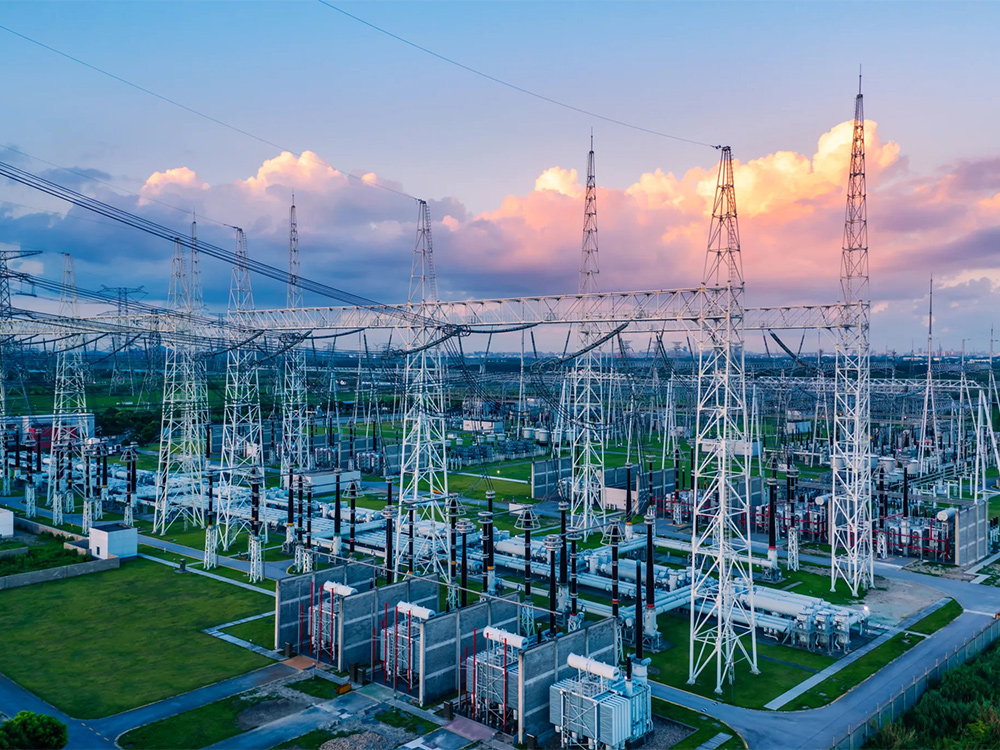





To achieve the high level of accuracy required for critical industrial processes, an Electric Distribution Box for Precise Current and Voltage Monitoring utilizes a multi-layered hardware and software architecture. At the sensor level, high-precision current transformers (typically Class 0.2S or 0.5S accuracy) are installed on each phase conductor. These sensors step down the primary current to a low-level secondary current (typically 1A or 5A) that can be safely measured by the digital metering unit. For voltage monitoring, direct potential taps or voltage transformers reduce the line voltage to standardized measurement levels.
The core of the system is the intelligent power meter or RTU (Remote Terminal Unit). This device digitizes the analog signals using high-speed analog-to-digital converters (ADCs) sampling at rates up to 12.8 kHz. This high sampling rate allows the system to compute not only the root-mean-square (RMS) values of current and voltage but also high-order harmonics (up to the 63rd harmonic), active power, reactive power, apparent power, power factor, and voltage/current imbalances.
Data collected by the distribution box must be communicated efficiently to upper-level supervisory systems. Modern panels support a wide array of industrial protocols:
Choosing the appropriate electric distribution box requires a comprehensive analysis of your electrical system's parameters and the specific goals of your monitoring program. The first step is determining the required level of measurement accuracy. For standard billing and energy cost allocation, Class 1.0 or Class 0.5 meters are typically sufficient. However, for power quality analysis, diagnostic troubleshooting, and compliance with strict utility grid-connection codes, Class 0.2S instrumentation is highly recommended.
Environmental conditions also play a decisive role in enclosure selection. Distribution boxes installed in harsh industrial environments, such as chemical plants or outdoor renewable energy farms, require high IP (Ingress Protection) ratings (e.g., IP65 or IP66) to protect internal electronics from dust, moisture, and corrosive agents. Stainless steel or fiberglass-reinforced polyester (FRP) enclosures offer superior corrosion resistance compared to standard sheet steel.
Finally, consider the scalability of the monitoring system. A future-proof distribution box should feature modular DIN-rail mounting spaces, allowing you to add more monitoring channels or upgrade communication modules as your facility expands and your data needs evolve.