

Leave Your Message
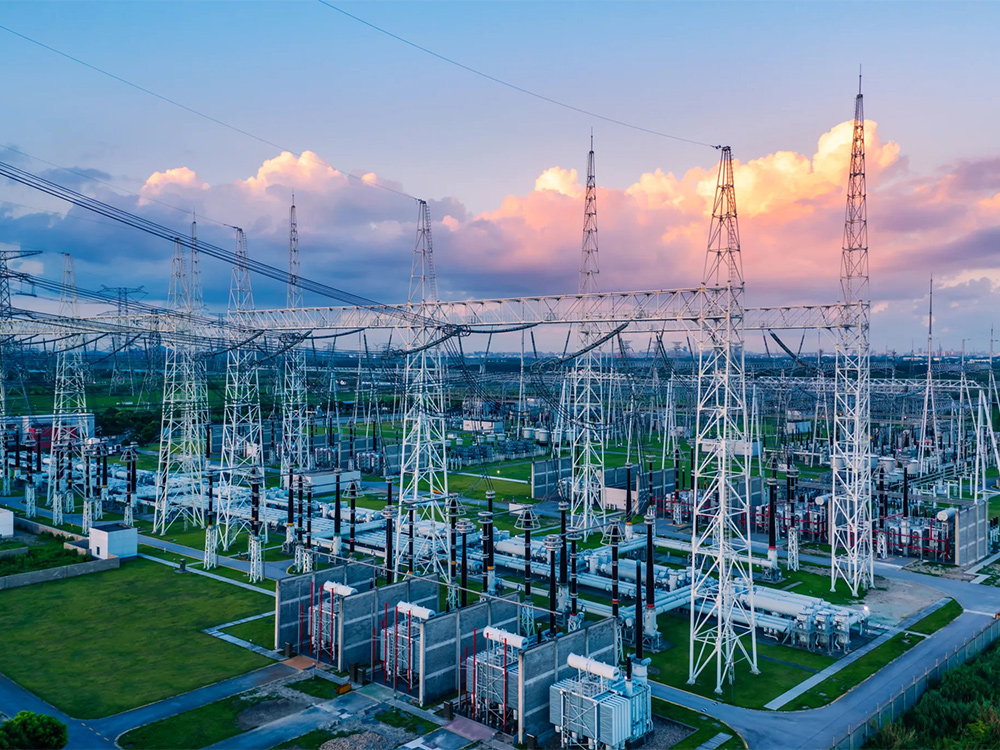
High-precision transformers for power grid stability and reliability monitoring

Specialized transformers for solar and wind power generation systems

Precise current and voltage transformers for manufacturing control systems

Smart transformers for commercial and municipal infrastructure monitoring
The global market for current and voltage transformers is experiencing robust growth, driven by infrastructure modernization, renewable energy expansion, and industrial automation. Market analysts project a compound annual growth rate exceeding 6% through 2030, with particular strength in Asia-Pacific and North American regions.
Contemporary monitoring transformers incorporate advanced materials, digital signal processing, and wireless communication capabilities. Innovations in core materials, insulation systems, and sensor integration have dramatically improved accuracy, reduced size, and extended operational lifespans while enabling remote monitoring and diagnostics.
Stringent international standards for power quality, safety, and energy efficiency are driving demand for high-precision monitoring equipment. Compliance with IEC, IEEE, and regional standards requires transformers with enhanced accuracy classes and extended measurement ranges to accommodate modern power system requirements.
Manufacturing sectors increasingly rely on precise power monitoring to optimize production efficiency and reduce energy costs. Electric transformers with advanced monitoring capabilities enable real-time power quality analysis, harmonic detection, and load profiling, facilitating data-driven operational decisions.
Environmental considerations are reshaping transformer design and manufacturing. Modern monitoring transformers utilize eco-friendly materials, feature reduced energy losses, and incorporate recyclable components. This sustainability emphasis aligns with global carbon reduction goals and circular economy principles.
As monitoring transformers become increasingly connected to digital networks, cybersecurity has emerged as a critical consideration. Manufacturers are implementing robust encryption, secure communication protocols, and intrusion detection systems to protect critical infrastructure from cyber threats.
Monitoring transformers form the sensory backbone of smart grids, providing granular data on power flow, voltage levels, and current distribution. These devices enable advanced grid management functions including automatic fault detection, load balancing, and demand response. Integration with SCADA systems allows operators to visualize network conditions in real-time and respond proactively to potential issues.
Solar and wind installations require specialized monitoring transformers capable of handling bidirectional power flow and rapid voltage fluctuations. These devices must accurately measure variable generation outputs, facilitate grid synchronization, and support maximum power point tracking. Their precision ensures optimal energy harvest while maintaining grid stability during intermittent generation periods.
Manufacturing environments demand transformers with exceptional accuracy and fast response times for critical process control applications. These devices monitor power quality parameters affecting sensitive equipment, detect harmonic distortions that can damage motors and drives, and provide data for energy management systems that identify optimization opportunities and reduce operational costs.
Modern commercial facilities utilize monitoring transformers for comprehensive energy management, tenant billing, and power quality assurance. These devices track consumption patterns across multiple circuits, identify inefficient equipment, and verify power factor correction system performance. Integration with building automation systems enables sophisticated energy optimization strategies.
Railway electrification, electric vehicle charging stations, and metro systems require robust monitoring transformers capable of handling high currents and harsh environmental conditions. These applications demand devices with wide measurement ranges, excellent overload capacity, and resistance to vibration, temperature extremes, and electromagnetic interference.
Mission-critical data centers depend on ultra-precise monitoring transformers to ensure uninterrupted power supply to servers and cooling systems. These devices must provide continuous measurement accuracy, support redundant monitoring architectures, and integrate with power management software that orchestrates load distribution and backup power systems during utility disturbances.
The transition from analog to digital monitoring transformers represents a paradigm shift in power system instrumentation. Next-generation devices incorporate microprocessors, advanced analog-to-digital converters, and digital signal processing algorithms that deliver unprecedented accuracy and functionality. These smart transformers can perform self-diagnostics, calibration verification, and condition monitoring, transmitting comprehensive data packages rather than simple analog signals. Digital outputs facilitate seamless integration with modern protection relays, energy management systems, and cloud-based analytics platforms.
Internet of Things integration is revolutionizing transformer monitoring by enabling wireless data transmission, remote configuration, and distributed intelligence. Wireless monitoring transformers eliminate costly cabling, simplify installation in retrofit applications, and support flexible sensor placement. Emerging protocols like MQTT and OPC UA facilitate standardized communication with enterprise systems, while edge computing capabilities allow local data processing and decision-making without constant cloud connectivity. Battery-powered wireless transformers are opening new possibilities for temporary monitoring and mobile applications.
Machine learning algorithms are being embedded into advanced monitoring systems to extract actionable insights from transformer data. AI-powered analytics can identify subtle patterns indicating incipient equipment failures, predict remaining useful life, and recommend optimal maintenance schedules. These systems learn normal operating patterns and detect anomalies that might escape human operators, enabling truly predictive rather than reactive maintenance strategies. Neural networks are also improving measurement accuracy by compensating for environmental factors and aging effects.
Advances in materials science and manufacturing techniques are enabling dramatic size reductions without sacrificing performance. Compact monitoring transformers occupy less panel space, reduce installation costs, and enable monitoring in space-constrained applications. Integration trends include combining current and voltage sensing in single devices, incorporating protection functions alongside measurement, and embedding transformers directly into switchgear and circuit breakers. These integrated solutions simplify system design and improve reliability by reducing connection points.
Modern power systems contain increasing levels of harmonic distortion from nonlinear loads and power electronic converters. Next-generation monitoring transformers feature extended frequency response to accurately measure harmonic components up to the 50th order and beyond. This capability is essential for power quality analysis, harmonic filter design, and compliance verification. Wide bandwidth transformers also support high-speed protection applications and transient recording for fault analysis.
Climate change and extreme weather events are driving demand for monitoring transformers with superior environmental performance. Enhanced designs feature wider operating temperature ranges, improved resistance to humidity and corrosive atmospheres, and robust mechanical construction for high-vibration environments. Sealed enclosures with advanced gasket systems protect internal components from moisture ingress, while conformal coatings on electronic assemblies provide additional protection in harsh industrial settings.
As the cornerstone of stable power grid operation, this industry encompasses all aspects of power generation, transmission, and distribution, placing extremely high demands on the reliability, safety, and long-term service performance of equipment. We provide core equipment for traditional thermal, hydroelectric, and nuclear power plants, substations at all levels, and power transmission and distribution networks.

The rapid development of green energy sources such as photovoltaics and wind power has placed higher demands on the adaptability and intelligence of the electrical equipment used in their production. We focus on the specific needs of new energy power generation scenarios, providing a full range of electrical solutions from generation to grid connection.
Modern factories rely on a continuous, safe, and high-quality power supply to ensure uninterrupted operation of production lines. Our products serve the power distribution systems and automation control loops of various manufacturing plants, acting as the "heart" and "nerves" of industrial power.
From large commercial complexes to smart city infrastructure, safe, efficient, and intelligent power distribution systems are the lifeblood of modern buildings. We provide a complete range of electrical products for various buildings and municipal projects, from main power distribution to end-point lighting.

Major infrastructure projects such as railways, highways, ports, and water conservancy are large-scale and operate in complex environments, posing a severe test to the durability and reliability of power equipment. We provide full-cycle product support for infrastructure projects, from temporary power supply during the construction phase to permanent power distribution during the operation phase.
Advanced monitoring transformers ensure optimal power quality across all applications, detecting harmonics, voltage sags, and transients that can damage sensitive equipment. Real-time data enables proactive maintenance and system optimization.
High-accuracy current and voltage transformers form the foundation of modern smart metering infrastructure, enabling precise billing, load profiling, and demand response programs that optimize grid efficiency and reduce costs.
Intelligent monitoring transformers with built-in diagnostics enable predictive maintenance strategies, identifying equipment degradation before failures occur. This approach minimizes downtime, extends asset life, and reduces maintenance costs significantly.