


10kV 35kV Stress Control Tubes and Heat Shrinkable Semiconductor Tubes: Comprehensive Guide
Introduction to 10kV Shrinkable Stress Control Tube
The reliability and safety of power transmission systems depend heavily on advanced cable accessories and insulation solutions. Among these, 10kV Shrinkable Stress Control Tube plays a pivotal role in maintaining optimal performance in medium-voltage networks, such as 10kV and 35kV applications. Designed to manage electrical stress and prevent insulation failure, these tubes are a critical part of cable jointing and termination systems. This article provides an in-depth exploration of the principles, functions, materials, and installation practices of stress control tubes, alongside their association with heat-shrinkable semiconductor tubes and other complementary cable accessories.
Understanding Electrical Stress and the Need for Stress Control Tubes
Power cables used in 10kV and 35kV networks must contend with significant electrical stress, especially at the points where insulation meets the conductor or in cables’ joints and terminations. When cables are terminated or jointed, the change in geometry causes distortion of electric field lines, resulting in concentrated electrical stress points. These stress points pose a risk of premature insulation breakdown or tracking, potentially threatening system stability and longevity.
Stress control tubes are engineered to redistribute these electric fields via specific material properties and design. By managing the stress gradient and smoothing the transition, they protect insulating layers from damage and ensure consistent electrical performance. The use of 10kV Shrinkable Stress Control Tube is therefore not only recommended but essential in high-voltage cable installation, aiding optimal operational security and reducing maintenance costs over time.
Material Composition and Working Principle
Stress control tubes for 10kV and 35kV applications are typically manufactured from specially formulated polymers. These materials exhibit high dielectric strength, durability against environmental factors, and precise electrical conductivity. Some stress control tubes leverage proprietary carbon black admixtures or other semi-conductive additives, allowing them to dissipate electrical stress efficiently.
The core working principle relies on the tube's ability to either grade or equalize the electric field surrounding the insulation. When installed, the 10kV Shrinkable Stress Control Tube covers the interface between different cable layers. The tube’s heat shrinkability ensures a tight, seamless fit, conforming perfectly to the interface, thereby creating a robust barrier against electrical, moisture, and environmental threats. As the tube shrinks upon heating, it physically changes shape and, through its semi-conductive properties, modifies the local electric field distribution to smoothly transition from high to low stress.
Heat Shrinkable Semiconductor Tubes: Compatibility and Advantages
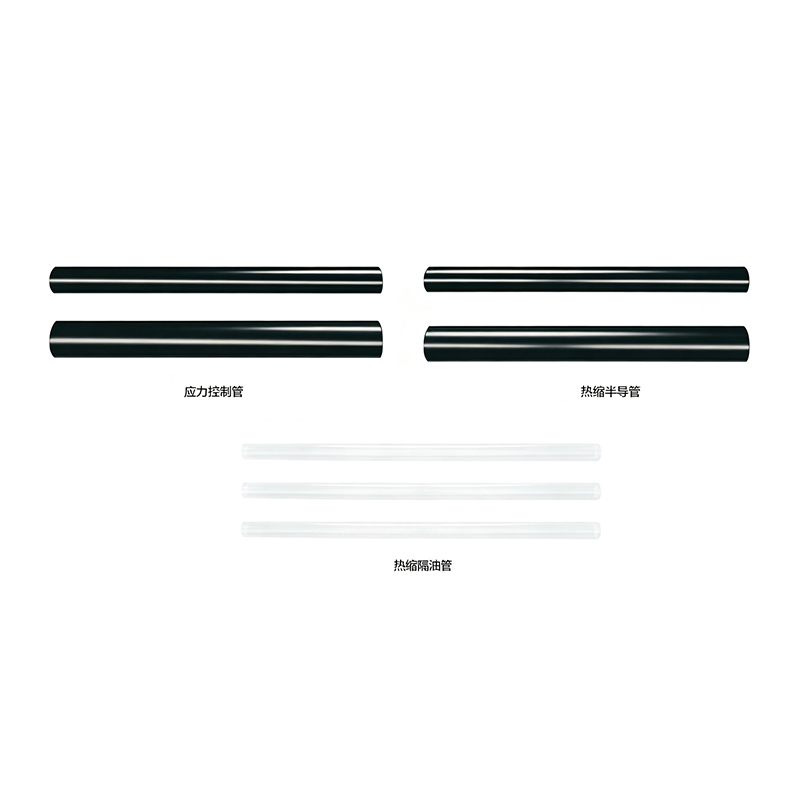
Closely related to stress control tubes are heat-shrinkable semiconductor tubes. These semi-conductive tubing products are generally installed in tandem with stress control tubes in medium-voltage cable terminations and joints, notably in Heat shrink cable termination kits. Their primary role is to maintain a continuous semi-conductive layer on the cable, extending the permissible region for electric stress redistribution and providing shielding against partial discharges.
The synergy between heat shrinkable stress control tubes and semiconductor tubes improves the overall durability and performance of cable terminations. Semiconductor tubes prevent dangerous voltage gradients from developing at the interface, reduce the risk of partial discharge, and shield sensitive areas from electromagnetic interference. Their heat-shrink properties provide superior fitting, ensuring enduring connection integrity even in harsh environments such as underground or outdoor cable installations.
Applications in 10kV and 35kV Cable Terminations and Joints
The deployment of 10kV Shrinkable Stress Control Tube and heat shrinkable semiconductor tubes is central to the installation of medium-voltage cable terminations and joints. These products are critical where cables enter equipment, transformers, switchgear, or transition between different cable runs. Typical applications include:
Cable Termination Kits: Stress control tubes and semi-conductive tubes are vital elements of heat shrink cable termination assembly, ensuring dependable insulation and electric field management. Cable Joints: In jointing operations, tubes are applied to bridge the gap between different cable layers, protecting against electrical stress and moisture ingress. Equipment Interfacing: Used when cables interface directly with electrical equipment operating at 10kV or 35kV, maintaining operational safety. Underground or Outdoor Installations: Heat shrink properties offer environmental sealing, protecting against moisture, UV exposure, and contaminants.
These tubes are available in multiple sizes and tailored material specifications, meeting diverse operational requirements and standards of power utility companies worldwide.
Installation Techniques and Best Practices
The installation process for 10kV Shrinkable Stress Control Tube and heat shrinkable semiconductor tubes must be meticulous to ensure the reliability of cable terminations and longevity of operation. The process typically includes the following steps:
1. Surface Preparation: Before application, the cable must be clean, dry, and free of contaminants. Proper surface preparation is crucial for adhesion and shrinking performance. 2. Positioning: The tube is carefully measured to cover the electrical stress region — particularly at the interface between conductor and insulation, or between different insulation layers. 3. Heat Application: Using a calibrated heat gun or torch, technicians gradually shrink the tube, ensuring uniform contraction without overheating. Proper temperature control is essential to avoid tube degradation or damage to underlying cable components. 4. Inspection: Post-shrinking, the installation is inspected for air gaps, incomplete shrinking, or surface defects. A seamless, wrinkle-free finish is ideal. 5. Additional Layers: If required, semi-conductive tubes or insulation tapes may be added to further reinforce the joint or termination.
Following manufacturer guidelines and employing trained personnel for installation greatly reduces the risk of cable failure. Training and understanding of the specific products used are integral for a successful outcome, as different brands and formulations may necessitate subtle variations in technique.
Performance Benefits and Technical Advantages
Utilizing 10kV Shrinkable Stress Control Tube and heat shrinkable semiconductor tubes delivers a myriad of operational benefits:
Enhanced Insulation Longevity: By grading the electric field and protecting against stress concentration, these tubes dramatically extend cable insulation lifespan. Improved System Reliability: Reduction of partial discharge and breakdown risks leads to fewer outages and maintenance calls. Superior Environmental Protection: The heat shrink fit serves as a barrier against moisture, chemicals, contaminants, and environmental stressors. Easy Installation: Products are designed for straightforward deployment, offering predictable shrinking characteristics for quick, efficient cable jointing and termination. Regulatory Compliance: Modern stress control tubes are manufactured according to international standards such as IEC, IEEE, and national codes, ensuring compatibility and safety in global projects.
In demanding utility environments, these advantages translate directly into reduced operational expense, increased infrastructure stability, and enhanced safety for personnel and assets.
Frequently Asked Questions (FAQ)
What is the function of 10kV and 35kV stress control tubes?
The primary function of 10kV and 35kV stress control tubes is to redistribute and grade the electric field at critical locations within cable terminations and joints. This prevents the formation of high-stress zones that can lead to insulation damage, tracking, or electrical breakdown.
How does a shrinkable stress control tube differ from other electrical tubing?
Shrinkable stress control tubes are made from materials engineered for optimal dielectric and semi-conductive properties. Their heat shrinkability enables a tight fit around irregular geometries, providing effective electrical stress management as opposed to conventional tubing, which may only serve as mechanical or environmental protection.
Are heat shrinkable semiconductor tubes necessary for all cable terminations?
While not mandatory in every installation, heat shrinkable semiconductor tubes significantly enhance the performance and reliability of medium-voltage cable terminations. They are particularly recommended for applications requiring high resistance to partial discharge or electromagnetic interference.
Can stress control tubes be used in outdoor or buried installations?
Yes. The heat shrink feature offers robust environmental sealing, protecting against moisture ingress, UV light, and contaminants. This makes stress control tubes ideal for outdoor as well as underground installations, supporting infrastructure in harsh conditions.
How are the tubes sized and selected?
Tubes are manufactured in different diameters and thicknesses, compatible with various cable specifications. Selection should consider voltage rating, conductor size, insulation material, and operating environment. Consulting with the manufacturer’s technical guide ensures appropriate product choice.
Recent Innovations and Industry Trends
As global demands on power infrastructure increase, manufacturers are continuously innovating in the realm of stress control accessories. Recent advancements include improved polymer formulations, greater environmental resistance, and faster installation processes. Automated quality verification during production enhances reliability, while digital traceability and real-time installation monitoring offer utility providers enhanced quality assurance.
Modern tubes may integrate nanomaterial enhancements or even smart sensors, facilitating predictive maintenance by detecting early signs of insulation breakdown or moisture infiltration. Additionally, eco-friendly manufacturing is on the rise, with tubes designed for reduced environmental impact during deployment and disposal.
Industry trends also show a growing reliance on end-to-end solutions, where stress control tubes are bundled with compatible semiconductor tubes and other accessories in pre-packaged termination kits. This streamlines procurement, simplifies installation logistics, and ensures overall system compatibility.
Buyer Considerations: Choosing the Right Stress Control Tube
Procurement decisions for 10kV Shrinkable Stress Control Tube and related products must be made with careful consideration of technical parameters and operational needs. Some key factors include:
- Voltage Range: Verify compatibility with 10kV or 35kV system requirements. - Material Properties: Assess dielectric strength, shrink ratio, thermal endurance, and resistance to environmental stressors. - Installation Environment: Choose tubes suited to indoor, outdoor, or subterranean deployment. - Certification and Compliance: Ensure products meet international and regional standards for safety and reliability. - Technical Support: Reliable manufacturers provide installation training, after-sales support, and customization for unique project requirements.
Reviewing technical documentation, consulting with experienced engineers, and partnering with established brands will help buyers achieve best-in-class performance in their cable terminations and jointing solutions.
Integrating Stress Control Tubes into Broader Cable Accessory Systems
Effective cable termination and jointing relies on the synergy between individual accessories. In addition to 10kV Shrinkable Stress Control Tube and semiconductor tubes, installations typically incorporate insulation tapes, anti-tracking tubes, mechanical sleeves, and environmental seals. Proper integration ensures that each accessory fulfills its intended role, providing a layered defense against electrical stress, environmental hazards, mechanical damage, and aging.
Many cable manufacturers offer entire accessory kits tailored to specific cable types and voltages. These kits simplify installation, ensuring correct sequencing and compatibility, thereby minimizing the risk of installation errors. For large-scale projects or retrofitting operations, customizing accessory combinations can optimize performance and address unique site conditions.
Utility providers, contractors, and engineers should assess the whole system rather than individual components, prioritizing reliability and operational efficiency over short-term cost savings. Continuous technical evaluation and field monitoring ensure that installed stress control tubes and related accessories deliver ongoing protection and performance.
Conclusion
Stress control tubes, especially those engineered for 10kV and 35kV applications, are foundational to the stable operation of medium-voltage power networks. When combined with heat shrinkable semiconductor tubes and carefully chosen cable accessories, they provide a robust defense against electrical stress, environmental threats, and operational hazards. Understanding their functions, material characteristics, installation requirements, and technical advantages empowers buyers and engineers to make informed decisions, fostering infrastructure reliability and safety. As industry innovations progress, investing in high-quality 10kV Shrinkable Stress Control Tube solutions ensures the continued excellence of power transmission systems, meeting the needs of today and tomorrow.