

Leave Your Message
High-performance potential transformers and voltage transformers engineered for generator step-up applications, renewable energy integration, and precision metering.
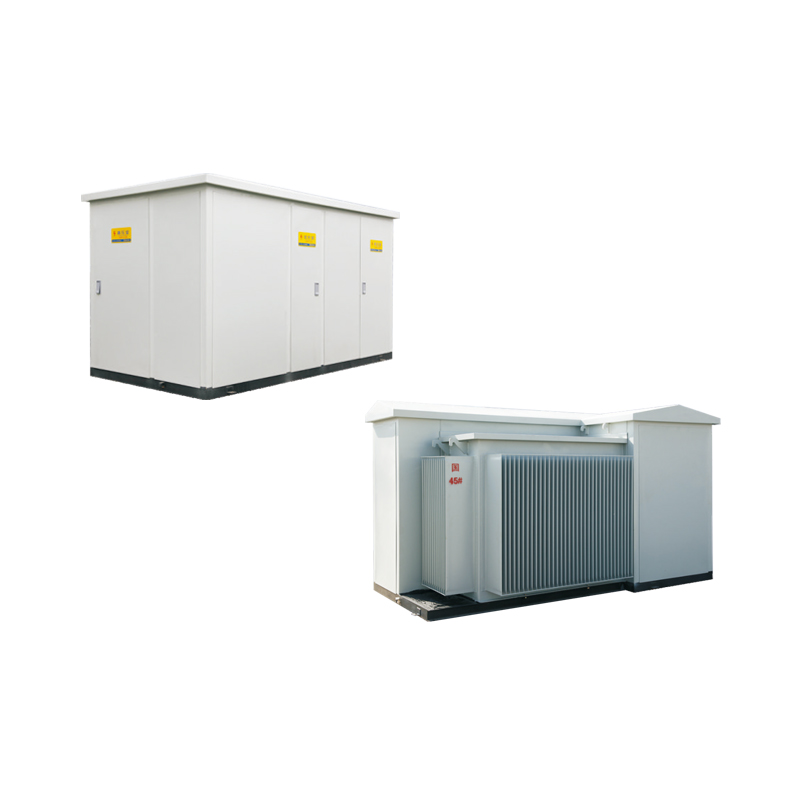

In modern power systems, potential transformers (PTs) — also referred to as voltage transformers (VTs) — serve as indispensable instruments for accurately measuring, monitoring, and controlling high-voltage circuits. When it comes to stepping up generator voltage, these devices play a uniquely critical role: they provide a proportional, isolated, and safe low-voltage replica of the high-voltage output, enabling protection relays, metering instruments, and control systems to operate safely and accurately without direct exposure to dangerous voltages.
Generators — whether diesel, gas turbine, hydro, wind, or solar — typically produce voltages ranging from 400V to 15kV at the terminals. Before power can be transmitted over long distances, step-up power transformers elevate this voltage to transmission levels (33kV, 110kV, 220kV, or higher). Potential transformers installed on the generator bus and step-up transformer secondary provide the voltage signals required for synchronization, protection, automatic voltage regulators (AVR), and revenue metering — all critical to safe, efficient generator operation.
A potential transformer operates on the same electromagnetic induction principle as a power transformer but is designed specifically for measurement accuracy rather than power delivery. In a generator step-up configuration, PTs are connected in parallel with the generator terminals or the high-voltage bus of the step-up transformer. The primary winding is connected to the high-voltage circuit, while the secondary winding delivers a standardized output — typically 100V or 110V AC — to connected instruments and relays.
Key performance parameters that define a PT's suitability for generator step-up applications include:
The global market for potential transformers in generator step-up applications is experiencing robust growth, driven by massive investments in power infrastructure, industrial expansion, and the energy transition. According to industry analysts, the instrument transformer market — which includes PTs and current transformers — is projected to exceed USD 6.5 billion by 2028, growing at a CAGR of approximately 5.8%.
Several commercial and industrial sectors are primary consumers of high-performance PTs for generator step-up systems:
The renewable energy revolution has created entirely new demands for potential transformers. Wind turbines, solar farms, and energy storage systems all require sophisticated voltage measurement at multiple points in the generation-to-grid chain.
In a wind power plant, each turbine's generator (typically 690V) is stepped up via a pad-mounted transformer to the collector voltage (33kV–35kV). PTs installed at the medium-voltage bus provide feedback for turbine control systems, reactive power compensation, and fault detection. At the main substation, higher-voltage PTs on the 110kV or 220kV bus enable grid synchronization and power quality monitoring.
For photovoltaic (PV) solar farms, string inverters output AC at 400V–800V, which is stepped up through central transformers to 10kV–35kV collector systems. PTs at the inverter output and collector bus are essential for maximum power point tracking optimization, anti-islanding protection, and compliance with grid codes requiring voltage ride-through capability.
Suian Industrial Control has a rich product line, widely used in various fields such as power control, mechanical operation control, automation control, new energy, robots, etc.
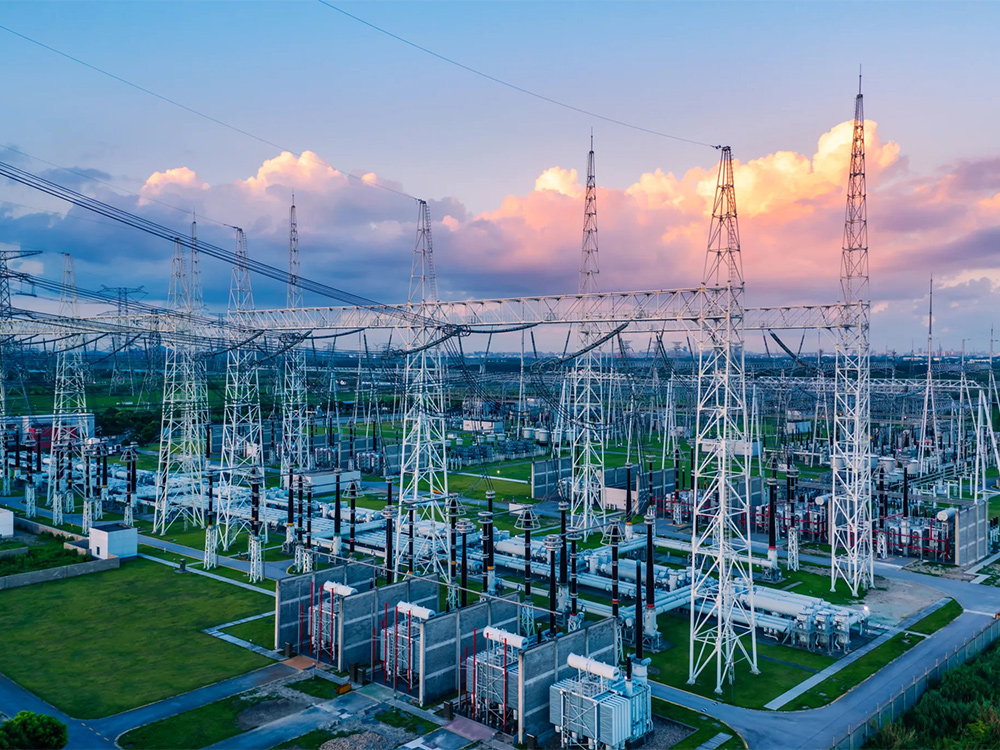
As the cornerstone of stable power grid operation, this industry encompasses all aspects of power generation, transmission, and distribution, placing extremely high demands on the reliability, safety, and long-term service performance of equipment. We provide core equipment for traditional thermal, hydroelectric, and nuclear power plants, substations at all levels, and power transmission and distribution networks.
Explore More →
The rapid development of green energy sources such as photovoltaics and wind power has placed higher demands on the adaptability and intelligence of the electrical equipment used in their production. We focus on the specific needs of new energy power generation scenarios, providing a full range of electrical solutions from generation to grid connection.
Explore More →
Modern factories rely on a continuous, safe, and high-quality power supply to ensure uninterrupted operation of production lines. Our products serve the power distribution systems and automation control loops of various manufacturing plants, acting as the "heart" and "nerves" of industrial power.
Explore More →
From large commercial complexes to smart city infrastructure, safe, efficient, and intelligent power distribution systems are the lifeblood of modern buildings. We provide a complete range of electrical products for various buildings and municipal projects, from main power distribution to end-point lighting.
Explore More →
Major infrastructure projects such as railways, highways, ports, and water conservancy are large-scale and operate in complex environments, posing a severe test to the durability and reliability of power equipment. We provide full-cycle product support for infrastructure projects, from temporary power supply during the construction phase to permanent power distribution during the operation phase.
Explore More →Next-generation smart grid infrastructure requires electronic voltage transformers and optical PTs capable of delivering digital IEC 61850-9-2 sampled value outputs, enabling seamless integration with digital protection IEDs, phasor measurement units (PMUs), and advanced distribution management systems (ADMS).
Explore More →Technological evolution, digitalization, and the global energy transition are reshaping the design, performance requirements, and commercial adoption of potential transformers worldwide.
Conventional electromagnetic PTs are increasingly being supplemented — and in some cases replaced — by electronic voltage transformers (EVTs) and non-conventional instrument transformers (NCITs). These devices use capacitive dividers, resistive dividers, or optical Faraday-effect sensors to measure voltage and output digital signals directly compatible with IEC 61850 process bus architectures, eliminating copper wiring and enabling real-time data integration with SCADA and energy management systems.
Modern PT installations increasingly incorporate embedded sensors and IoT connectivity to enable continuous condition monitoring. AI algorithms analyze partial discharge patterns, insulation resistance trends, and thermal signatures to predict failures before they occur. This predictive maintenance paradigm is particularly valuable in generator step-up applications where unplanned outages carry enormous financial penalties.
Global commitments to net-zero emissions are accelerating the deployment of wind, solar, and hydrogen-based generation. Each new renewable energy project requires PTs at multiple voltage levels — from generator terminal through collector system to transmission interconnection. This pipeline represents a sustained, multi-decade demand driver for advanced potential transformer technology.
The growth of offshore wind and long-distance HVDC transmission corridors is creating demand for specialized PTs capable of operating in AC/DC hybrid environments, subsea conditions, and at voltage levels exceeding 500kV. These applications push the boundaries of insulation technology, requiring innovative designs using SF6-free gas mixtures, solid-state insulation, and advanced composite materials.
Space constraints in urban substations, offshore platforms, and prefabricated switchgear assemblies are driving demand for compact, gas-insulated (GIS) PTs that can be integrated directly into switchgear bays. These modular solutions reduce installation footprint by up to 70% compared to conventional air-insulated designs while delivering equivalent or superior measurement accuracy.
Battery energy storage systems (BESS) and microgrid controllers require high-bandwidth PTs capable of accurately measuring rapidly varying voltage waveforms during charge/discharge cycles, frequency response events, and islanding transitions. This emerging application segment demands PTs with extended frequency response characteristics beyond the traditional 50/60 Hz power frequency specification.
Suian Industrial Control delivers a comprehensive portfolio of potential transformers and voltage measurement solutions engineered specifically for generator step-up applications across utility, industrial, and renewable energy sectors. Our products are designed to IEC, GB, and ANSI standards, ensuring global compatibility and compliance with the most demanding grid codes and safety regulations.
Our engineering team brings decades of experience in designing PT solutions for the full spectrum of generator step-up scenarios — from small industrial captive power plants to utility-scale combined-cycle gas turbine (CCGT) facilities. We understand that each application presents unique challenges in terms of voltage level, accuracy class, burden, environmental conditions, and protection coordination philosophy.
For generator protection applications, we supply PTs with dual secondary windings — one winding dedicated to metering (Class 0.2 or 0.5) and a second winding for protection relays (Class 3P or 6P) — ensuring that measurement accuracy and protection sensitivity are both optimized without compromise. Our PTs are compatible with all major protection relay platforms including Siemens SIPROTEC, ABB REL/REF series, GE Multilin, and SEL.
Standard product ranges cover primary voltages from 3kV through 40.5kV, with customized designs available for higher voltage classes. Key technical capabilities include:
As a China-based manufacturer with an established global supply network, Suian Industrial Control offers competitive pricing without compromising on quality. Our manufacturing facilities operate under ISO 9001 quality management systems, and all potential transformers undergo rigorous type testing, routine testing, and special testing in accordance with international standards. Factory acceptance testing (FAT) can be witnessed by customers or third-party inspection agencies, and full documentation packages including test reports, calibration certificates, and material traceability records are provided as standard.
We supply to projects across Asia, the Middle East, Africa, South America, and Southeast Asia, with established logistics partnerships ensuring reliable delivery to even the most remote project sites. Our technical support team provides pre-sales consultation, installation guidance, commissioning support, and after-sales service throughout the product lifecycle.
Explore our full range of potential transformers and voltage transformation solutions for generator step-up, protection, and metering applications.
Contact our engineering team for expert consultation on potential transformer selection, application design, and technical specifications tailored to your generator step-up project requirements.
Get Expert Consultation →