
Leave Your Message
Featured Products

Comprehensive Guide
In today's increasingly digitized industrial landscape, power supply transformers serve as the critical first line of defense for sensitive electronic control circuits. These sophisticated devices not only convert electrical energy from one voltage level to another but also provide essential isolation, filtering, and protection functions that safeguard delicate control systems from power quality issues, voltage fluctuations, and electrical disturbances that could otherwise cause catastrophic failures.
The role of power supply transformers in protecting electronic control circuits has evolved dramatically over the past two decades. Modern control systems—whether in industrial automation, building management, renewable energy installations, or transportation infrastructure—rely on microprocessors, programmable logic controllers (PLCs), and sensitive semiconductor components that require clean, stable power supplies. A single voltage spike, harmonic distortion, or transient event can corrupt data, damage components, or cause system shutdowns that result in significant operational and financial losses.
The global market for power supply transformers designed specifically for electronic control circuit protection has experienced robust growth, driven by several converging factors. Industry analysts estimate the market reached approximately $8.7 billion in 2023, with projections indicating a compound annual growth rate (CAGR) of 6.2% through 2030. This expansion reflects the accelerating adoption of automation technologies, the proliferation of IoT-enabled control systems, and increasingly stringent power quality requirements across diverse industrial sectors.
Manufacturing facilities worldwide are undergoing digital transformation initiatives that incorporate Industry 4.0 principles, creating unprecedented demand for reliable power conditioning and protection solutions. Automotive manufacturing plants, for instance, now deploy thousands of electronic control units (ECUs) that coordinate robotic assembly lines, quality inspection systems, and logistics management—all requiring transformer-based power supplies with exceptional stability and noise rejection characteristics.
The semiconductor manufacturing sector represents a particularly demanding application environment where power supply transformers must deliver ultra-clean power to control circuits managing nanometer-precision fabrication equipment. Even microsecond-duration voltage deviations can result in wafer defects costing hundreds of thousands of dollars. Consequently, semiconductor fabs invest heavily in multi-stage power conditioning systems featuring isolation transformers, active filtering, and redundant power architectures.
The renewable energy sector has emerged as another significant growth driver for specialized power supply transformers. Solar photovoltaic installations and wind farms require sophisticated control systems that manage power conversion, grid synchronization, and safety functions. These control circuits must operate reliably in challenging environmental conditions while maintaining precise control over power electronics switching at frequencies exceeding 20 kHz. Transformers serving these applications must provide galvanic isolation, common-mode noise rejection, and thermal stability across wide operating temperature ranges.
The power supply transformer industry is experiencing a technological renaissance driven by advances in materials science, power electronics, and digital control techniques. Traditional silicon steel core transformers are increasingly being supplemented or replaced by amorphous metal and nanocrystalline core materials that offer significantly reduced core losses—often 70-80% lower than conventional materials. This efficiency improvement not only reduces operational costs but also minimizes thermal management requirements, enabling more compact designs suitable for space-constrained control cabinet installations.
Nanocrystalline core materials, composed of iron-based alloys with controlled crystalline structures measuring just 10-20 nanometers, provide exceptional magnetic permeability and low coercivity. These characteristics translate to superior performance in high-frequency applications where traditional transformers exhibit excessive losses. Control circuits for switched-mode power supplies, variable frequency drives, and power factor correction systems particularly benefit from nanocrystalline core transformers operating efficiently at frequencies from 20 kHz to over 100 kHz.
The integration of smart monitoring capabilities represents another significant development trend. Modern power supply transformers increasingly incorporate embedded sensors and communication interfaces that provide real-time data on operating parameters including load current, temperature distribution, insulation resistance, and harmonic content. This condition monitoring capability enables predictive maintenance strategies that prevent unexpected failures and optimize replacement schedules, reducing total cost of ownership by 15-25% according to recent industry studies.
Manufacturers are developing transformers with built-in IoT connectivity that seamlessly integrate with building management systems, SCADA platforms, and cloud-based analytics services. These "intelligent transformers" can automatically adjust compensation parameters, report anomalous operating conditions, and coordinate with upstream and downstream power management devices to optimize overall system efficiency. The data generated by these connected devices provides valuable insights into power quality trends, load patterns, and potential system vulnerabilities.
Industry Analysis
Regulatory frameworks worldwide are implementing increasingly stringent energy efficiency requirements for transformers. The European Union's Ecodesign Directive, U.S. Department of Energy efficiency standards, and similar regulations in Asia are driving manufacturers to develop transformers with efficiency ratings exceeding 98%, reducing operational costs and environmental impact.
The demand for compact control systems is pushing transformer manufacturers to develop higher power density solutions. Advanced cooling techniques, including micro-channel heat exchangers and phase-change materials, enable transformers to deliver 2-3 times more power in equivalent volumes compared to designs from a decade ago.
As electromagnetic environments become increasingly congested, transformers must provide superior electromagnetic interference (EMI) and radio frequency interference (RFI) protection. Multi-layer shielding techniques, optimized winding configurations, and advanced filtering topologies ensure control circuits remain immune to external disturbances while minimizing emissions.
Application Analysis
Manufacturing facilities rely on complex networks of PLCs, distributed control systems (DCS), and supervisory control systems that coordinate production processes. Power supply transformers serving these control circuits must provide isolation between high-voltage machinery and low-voltage control systems, typically stepping down 480V or 400V three-phase power to 24VDC or 120VAC control voltages. Critical specifications include transient voltage suppression capabilities exceeding 6kV, common-mode noise rejection greater than 60dB, and temperature stability within ±0.5% across operating ranges from -20°C to +70°C.
Chemical processing plants present particularly demanding requirements where control circuit failures can result in hazardous material releases or equipment damage. Transformers in these environments must meet stringent safety certifications including ATEX for explosive atmospheres, provide Class I Division 2 ratings, and incorporate redundant safety features such as thermal cutoffs and short-circuit protection rated for 20x nominal current.
Modern commercial buildings implement sophisticated building automation systems (BAS) that manage HVAC, lighting, access control, and energy management functions through distributed networks of controllers and sensors. These systems typically operate on 24VAC power derived from isolation transformers that protect sensitive control electronics from power line disturbances. With buildings increasingly incorporating variable air volume (VAV) systems, demand-controlled ventilation, and integrated renewable energy sources, the control circuits must maintain precise operation despite highly variable electrical loads.
Data centers represent an extreme case where power supply reliability directly impacts business continuity. Control circuits managing UPS systems, precision cooling equipment, and power distribution units require transformers with availability exceeding 99.999%, often implemented through redundant configurations with automatic failover capabilities. These transformers must maintain voltage regulation within ±1% during load transitions and provide complete isolation from harmonics generated by rectifiers and inverters throughout the facility.
Solar inverters and wind turbine controllers operate in electrically harsh environments characterized by rapid voltage fluctuations, high-frequency switching noise, and significant common-mode currents. Power supply transformers serving these control circuits must provide exceptional isolation (typically 4kV or greater) while maintaining efficiency at partial loads, as renewable generation varies continuously with environmental conditions. Advanced designs incorporate active filtering to mitigate harmonics and employ toroidal core geometries that minimize electromagnetic emissions that could interfere with communication systems.
Smart grid infrastructure relies on intelligent electronic devices (IEDs) distributed throughout the electrical distribution network to monitor power quality, coordinate protective relaying, and enable demand response programs. These devices require power supplies capable of operating across wide input voltage ranges (85-265VAC), surviving voltage sags and swells, and maintaining operation during brief power interruptions through energy storage integration. Transformers designed for these applications often incorporate power factor correction and active harmonic filtering to improve overall grid power quality.
Railway signaling and train control systems represent mission-critical applications where power supply failures can directly threaten passenger safety. Control circuits managing interlocking systems, automatic train protection, and communications-based train control (CBTC) require transformers meeting rigorous railway industry standards including EN 50155 for electronic equipment on rolling stock and CENELEC standards for signaling applications. These transformers must withstand severe mechanical vibration (up to 5G acceleration), extreme temperature variations (-40°C to +85°C), and electromagnetic interference from traction power systems operating at voltages up to 25kV.
Modern railway systems increasingly implement positive train control (PTC) technologies that require distributed networks of wayside equipment powered by transformers that maintain operation despite voltage fluctuations from regenerative braking, nearby lightning strikes, and switching transients from overhead catenary systems. Fail-safe design principles mandate that power supply failures default to safe states, often requiring transformers with redundant windings and independent monitoring circuits.
Selecting appropriate power supply transformers for electronic control circuit protection requires careful consideration of multiple technical parameters that directly impact system reliability, safety, and performance. Understanding these specifications and their practical implications enables engineers to specify transformers that meet application requirements while optimizing cost and size constraints.
Galvanic isolation between primary and secondary windings provides essential protection against ground loops, common-mode noise, and catastrophic overvoltage events. Industrial control applications typically require minimum isolation voltages of 1.5kV to 4kV, verified through dielectric withstand testing at twice the rated voltage plus 1000V for one minute. Safety-critical applications may mandate reinforced insulation systems providing 5kV or greater isolation, implemented through multiple insulation barriers, increased creepage distances, and specialized insulating materials.
The dielectric strength specification indicates the transformer's ability to withstand voltage stress without insulation breakdown. High-quality transformers designed for control circuit protection typically demonstrate dielectric strength exceeding 10kV between primary and secondary windings, with additional testing between windings and core/shield at 2kV or greater. These specifications become particularly critical in applications involving variable frequency drives or other power electronics that generate high dv/dt transients potentially causing insulation degradation over time.
Voltage regulation defines the transformer's ability to maintain stable secondary voltage despite variations in load current or primary voltage. Electronic control circuits typically require regulation better than ±3% from no-load to full-load conditions, with high-performance applications demanding ±1% or tighter regulation. Achieving superior regulation requires minimizing winding resistance and leakage inductance through optimized core geometries, conductor sizing, and winding techniques.
Dynamic load response characteristics become critical in applications where control circuits experience rapid load changes, such as motor starter coils energizing or communication modules transitioning between sleep and active modes. Transformers serving these applications should demonstrate transient voltage deviations less than ±5% with recovery times under 10 milliseconds, preventing voltage dips that could cause controller resets or communication errors.
Transformer losses manifest as heat that must be dissipated to prevent insulation degradation and ensure reliable long-term operation. Modern control circuit transformers achieve efficiency ratings of 95-98%, with premium designs incorporating amorphous or nanocrystalline cores reaching 98.5% or higher. These efficiency improvements directly translate to reduced cooling requirements and lower operating costs, particularly significant in applications involving hundreds or thousands of transformers such as building automation systems.
Temperature rise specifications indicate the transformer's thermal performance under rated load conditions. Standard designs typically exhibit temperature rises of 40-65°C above ambient when operating at full load in 40°C ambient environments. Applications requiring operation in higher ambient temperatures (up to 70°C) or enclosed cabinets with limited ventilation may require oversized transformers or designs incorporating enhanced cooling features such as finned enclosures or forced air cooling.
The power supply transformer industry stands at the threshold of transformative changes driven by converging technological advances in materials science, power electronics, and digital control systems. Wide-bandgap semiconductors such as silicon carbide (SiC) and gallium nitride (GaN) enable power conversion at frequencies exceeding 500 kHz, requiring transformer designs optimized for these operating regimes. High-frequency operation enables dramatic size and weight reductions—transformers operating at 100 kHz can achieve 10x higher power density compared to 50/60 Hz designs.
Additive manufacturing technologies are beginning to impact transformer production, enabling complex core geometries and winding configurations impossible to achieve through conventional manufacturing. 3D-printed cores using soft magnetic composites offer design flexibility that optimizes magnetic flux paths while minimizing eddy current losses. Similarly, printed circuit board (PCB) transformers incorporating planar windings provide exceptional repeatability and integration density for control circuit applications requiring multiple isolated power supplies.
Wireless power transfer technologies, while currently limited to low-power applications, represent a potential paradigm shift for control circuit power delivery. Resonant inductive coupling systems can deliver tens of watts across air gaps of several centimeters, enabling power supply architectures that eliminate physical connections to control circuits in rotating equipment, moving machinery, or hazardous environments. As efficiency and power levels improve, wireless power transfer may complement or supplement traditional transformer-based power supplies in specialized applications.
The emerging Industry 5.0 paradigm emphasizes human-machine collaboration and sustainable manufacturing practices, creating new requirements for power supply infrastructure. Control circuits in collaborative robot (cobot) systems require power supplies with enhanced safety features including safe extra-low voltage (SELV) outputs, current limiting, and rapid fault detection. These safety-oriented designs often incorporate multiple independent monitoring systems and redundant protection mechanisms that prevent hazardous voltage exposure even under multiple failure conditions.
Power supply transformers represent critical infrastructure components whose reliability directly impacts operational continuity, safety, and economic performance across virtually all industrial sectors. As control systems become increasingly sophisticated and interconnected, the demands placed on power supply infrastructure intensify correspondingly. Organizations that recognize the strategic importance of power supply transformer selection and invest in high-quality, appropriately specified solutions position themselves for competitive advantage through enhanced reliability, reduced maintenance costs, and improved operational flexibility.
The convergence of digitalization, sustainability imperatives, and technological innovation creates unprecedented opportunities for transformer manufacturers and users alike. Advanced materials, intelligent monitoring capabilities, and optimized designs deliver performance levels unimaginable just a decade ago. Organizations partnering with experienced transformer suppliers who understand application-specific requirements and can provide comprehensive technical support will successfully navigate the complexities of modern power supply infrastructure while positioning themselves for future technological transitions.
Yueqing Suian Electric Co., Ltd. is a wholly state-owned trading company controlled by Yueqing Liushi Urban and Rural Construction Investment Co., Ltd., with a registered capital of 10 million yuan. It has been deeply involved in the field of electrical product trading. With its solid state-owned background, rich experience in serving central enterprises, and the leading electrical industry ecosystem and location empowerment in China, it is committed to pioneering a new pattern of global electrical trade with the responsibility of a state-owned enterprise, becoming a core partner of the electrical supply chain trusted by global customers, and providing high-standard and reliable electrical products and solutions for overseas markets.
Liushi Town, known as "Zhejiang's No. 1 Industrial Strong Town," achieved a total industrial output value of 106.76 billion yuan in 2024, exceeding 100 billion yuan for two consecutive years and firmly ranking first in Zhejiang Province among the top 1,000 towns in China in terms of comprehensive strength. As a wholly state-owned enterprise, the company, backed by the state-owned capital of the Liushi Town Government, naturally possesses core advantages such as strong financial strength, compliant operation, and strong risk resistance. The company has accumulated extensive cooperative experience in the domestic market, successfully serving numerous leading central enterprises, including China Construction Eighth Engineering Bureau, China Construction Science & Industry Group Co., Ltd., China Construction Second Engineering Bureau, and Sinopec. It has accumulated rich project experience in infrastructure engineering, energy and power, and other fields. Its products and services have passed the stringent standards of central enterprises and possess mature capabilities suitable for large-scale projects and complex scenarios.
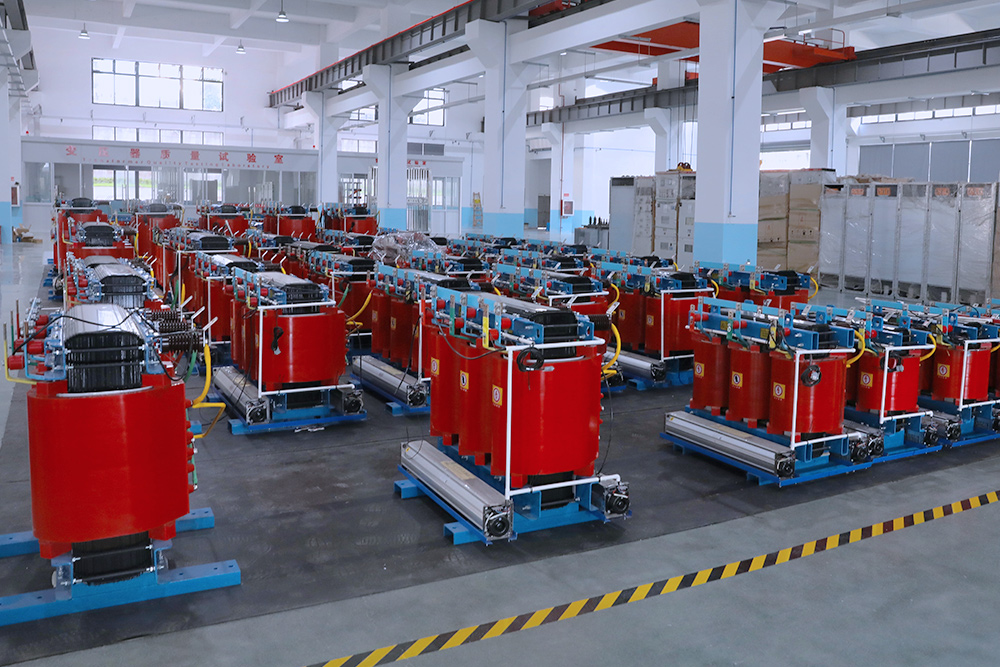
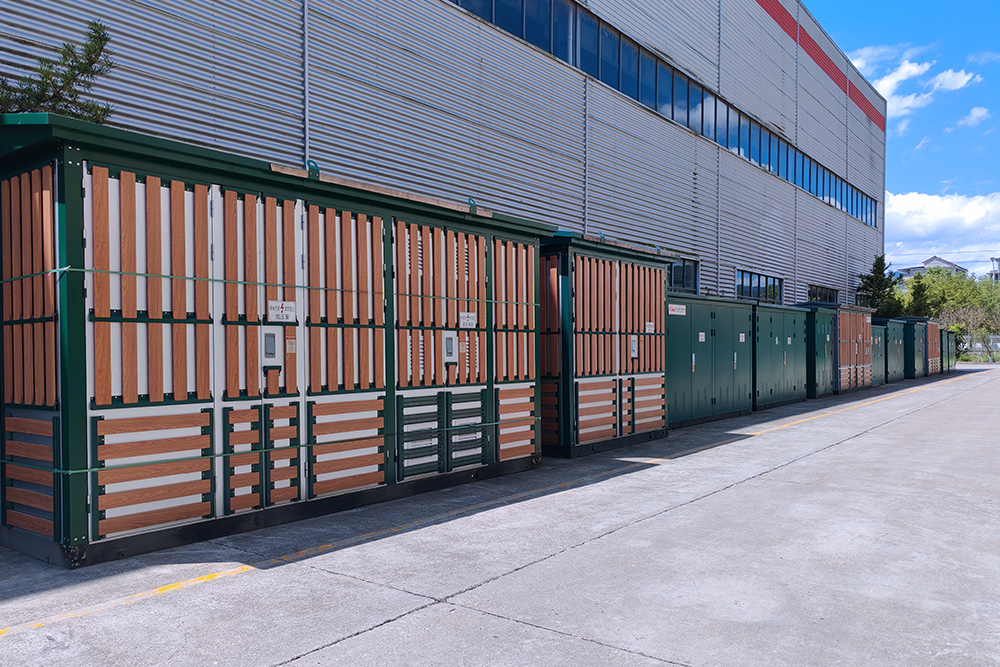
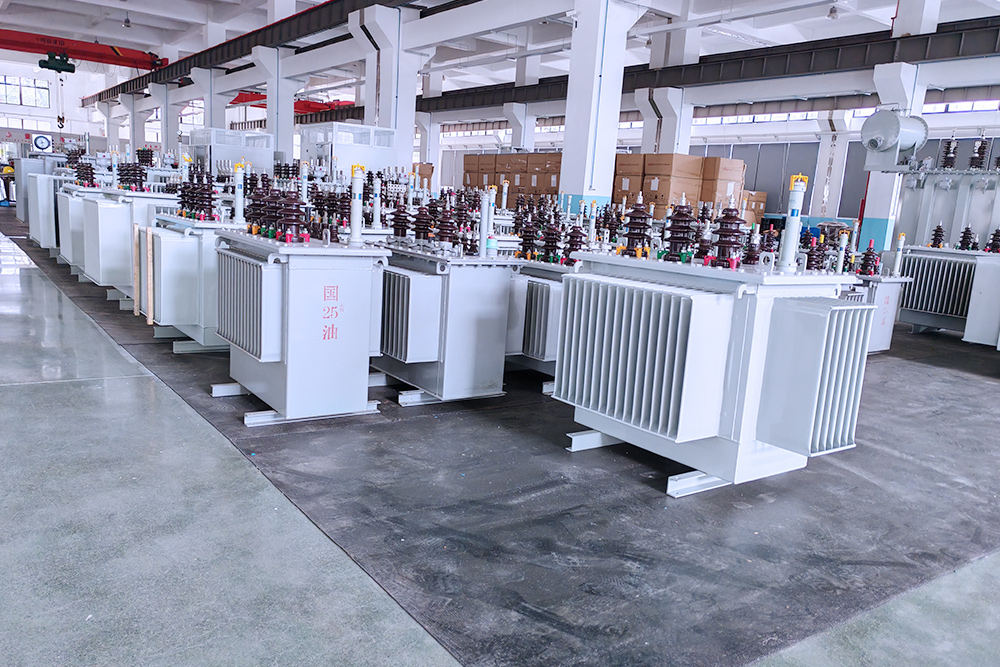
Based in Liushi, Yueqing, known as the "Electrical Capital of China" and the "Export Base of Low-Voltage Electrical Appliances in China," the company focuses on core trade in the electrical field. Boasting unparalleled supply chain advantages, it mainly deals in over 200 series and 25,000 models of products, including transformers, high and low voltage electrical equipment, complete sets of electrical equipment, wires and cables, and new energy electrical products. Leveraging state-owned platform resources, the company ensures product quality and supply stability while achieving high cost-effectiveness through the scale effect of industrial clusters, providing diversified product choices for overseas customers. Deeply integrated into the "Belt and Road" initiative, the company excels in connecting with major overseas infrastructure and energy projects, and can provide supporting services for electrical products that meet international standards.
Adhering to the core principles of "integrity as the foundation, compliance as the basis, and win-win cooperation as the way," Yueqing Sui'an Electric Co., Ltd. builds a solid foundation for cooperation with the credibility of a state-owned enterprise, ensures product quality with the service experience of a central enterprise, empowers global competitiveness with the advantages of industrial clusters, and connects overseas markets with professional services. Leveraging the "Electrical+" strategy of Liushi Town and the benefits of six emerging industrial parks, the company collaborates with global partners to build an international trade network, empowering the development of the global electrical industry with the quality of a state-owned enterprise, and is committed to becoming a trustworthy international electrical trading partner.
Yueqing Suian Electric Co., Ltd.









Complete Product Range