

- Home
- About Us
- Products
- News
- Application
- FAQ
- Contact Us
- Resources
Leave Your Message
Engineered for seamless integration with modern telemetry, digital relays, and real-time current and voltage waveform analytics.
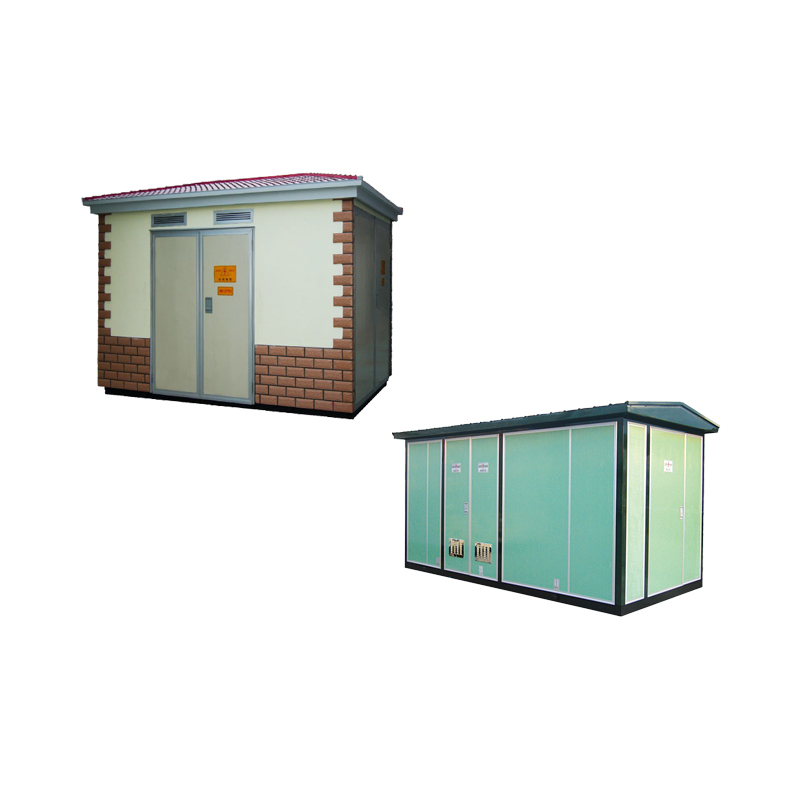
Compact European-style modular substation equipped with dual-channel current/voltage transducer busbars and harmonic distortion analyzers.
View Technical Specs →
Pre-commissioned switchgear with embedded Rogowski coils and optical voltage sensors designed for dynamic bidirectional renewable flow tracking.
View Technical Specs →
High-integrity prefabricated station featuring isolated analog measurement cubicles, transient fault capture, and cloud SCADA connectivity.
View Technical Specs →
Outdoor weatherproof prefabricated substation equipped with synchronized phasor measurement units (PMUs) for wide-area voltage stability monitoring.
View Technical Specs →High-fidelity instrumentation current transformers (CTs) and potential transformers (PTs) maintaining calibration across extreme thermal shifts.
Native support for Sampled Values (SV) and GOOSE protocol messaging, enabling full digitalization from switchyard sensors to the control room.
Captures up to the 63rd harmonic order and sub-cycle voltage sags, surges, and flicker to protect sensitive mission-critical manufacturing assets.
Galvanized and composite weatherproof housing with thermal-isolated ventilation designed for corrosive coastal and desert operations.
In modern electrical grid management and high-density industrial electrification, the capability to perform precise, real-time current and voltage monitoring has transitioned from a fundamental maintenance tool to the cornerstone of operational resilience, energy efficiency, and predictive asset management. As regional grids absorb unprecedented capacities of intermittent renewables—such as utility-scale solar farms and offshore wind installations—the voltage profiles and load flows across transmission and distribution networks experience rapid, non-linear fluctuations. Traditional analog electromechanical instrumentation, historically constrained by core saturation, magnetic hysteresis, and analog thermal drift, is rapidly giving way to next-generation intelligent substation equipment.
Modern electrical distribution topologies require sub-cycle sampling rates, wide dynamic ranges, and galvanic isolation capable of measuring microampere leakage currents alongside mega-ampere fault occurrences. Whether configured in a compact YB□ High Voltage/Low Voltage Prefabricated Substation or a high-voltage transmission substation yard, precise current and voltage monitoring apparatus forms the critical sensory interface for digital protective relays, automated tap changers, Phasor Measurement Units (PMUs), and enterprise energy management architectures.
Utilizing optical Faraday effect current sensors and Pockels effect voltage sensors to eliminate magnetic saturation and ferroresonance while achieving Class 0.1 accuracy.
Air-core toroidal coils offering exceptional linearity over extreme current ranges, eliminating open-secondary safety hazards and reducing physical switchgear footprint.
High-bandwidth dividers providing uncompromised frequency response from DC up to hundreds of kilohertz, vital for monitoring high-frequency inverter-induced harmonics.
Continuous Total Harmonic Distortion (THD) computation ensuring compliance with IEEE 519 and EN 50160 power quality standards in VFD-heavy facilities.
Precision phase-angle and baseline current drift tracking expose early transformer winding degradation, insulation breakdown, and breaker contact erosion.
Ensuring multi-quadrant active, reactive, and apparent energy billing remains completely error-free across high-voltage inter-tie points and private PPAs.
The global electrical market is experiencing a profound transformation accelerated by three primary catalysts: decentralized energy generation, electrification of high-energy industrial manufacturing (such as green hydrogen electrolyzers, semiconductor fabs, and hyperscale data centers), and the regulatory mandate to reduce transmission losses. In this environment, substation equipment is evaluated not merely as static enclosures or iron-core step-down units, but as intelligent, telemetry-enabled cyber-physical power hubs.
The transition from copper wiring to fiber-optic process buses represents the most significant paradigm shift in substation secondary engineering. Traditional installations require hundreds of meters of heavy shielded copper cabling carrying lethal secondary currents (1A or 5A) and voltages (110V) from switchgear bays to remote relay panels. In contrast, modern prefabricated substations integrate Merging Units (MUs) directly at the primary sensor location. The MU samples analog current and voltage values synchronously using GPS/PTP (IEEE 1588) time-stamps and streams them across an optical Ethernet ring according to IEC 61850-9-2 Sampled Values (SV). This architecture eliminates voltage drops across lead wires, eradicates CT saturation risks, drastically diminishes electromagnetic interference (EMI), and allows instantaneous reconfiguration through software-defined protection schemes.
With bidirectional power flows becoming the norm due to distributed photovoltaic (PV) systems and battery energy storage systems (BESS), substations face severe voltage volatility, sudden reverse-power conditions, and phase unbalances. Edge-computing microcontrollers and AI analytical modules embedded directly into high-and-low voltage switchgear continuously process high-frequency sampled data. By analyzing minor current anomalies and voltage harmonics at rates exceeding 10,000 samples per second, these systems forecast potential insulator flashovers, detect high-impedance earth faults, and autonomously command smart inverters and capacitor banks to stabilize voltage profiles before grid violations propagate.
Urban density constraints and aggressive renewable construction timelines have driven exponential demand for factory-assembled, pre-tested prefabricated transformer substations (such as the YB series). By housing high-voltage ring main units (RMU), high-efficiency dry-type or oil-immersed transformers, low-voltage distribution boards, and all associated current and voltage instrumentation inside a structurally unified, weatherproof enclosure, developers achieve up to 70% reduction in civil construction time and guaranteed factory-calibrated measuring loops.
Suian Industrial Control has a rich product line, widely used in various fields such as power control, mechanical operation control, automation control, new energy, robots, etc. Engineered for precise current and voltage monitoring in demanding operating environments.
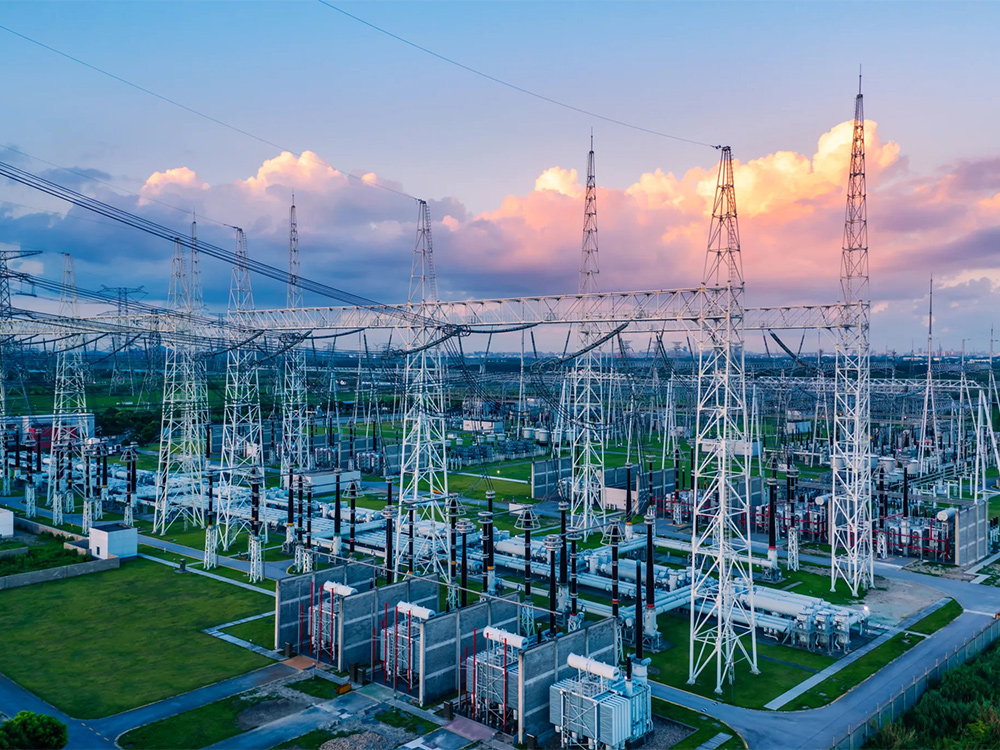

As the cornerstone of stable power grid operation, this industry encompasses all aspects of power generation, transmission, and distribution, placing extremely high demands on the reliability, safety, and long-term service performance of equipment. We provide core equipment for traditional thermal, hydroelectric, and nuclear power plants, substations at all levels, and power transmission and distribution networks.

The rapid development of green energy sources such as photovoltaics and wind power has placed higher demands on the adaptability and intelligence of the electrical equipment used in their production. We focus on the specific needs of new energy power generation scenarios, providing a full range of electrical solutions from generation to grid connection.

Modern factories rely on a continuous, safe, and high-quality power supply to ensure uninterrupted operation of production lines. Our products serve the power distribution systems and automation control loops of various manufacturing plants, acting as the "heart" and "nerves" of industrial power.

From large commercial complexes to smart city infrastructure, safe, efficient, and intelligent power distribution systems are the lifeblood of modern buildings. We provide a complete range of electrical products for various buildings and municipal projects, from main power distribution to end-point lighting.

Major infrastructure projects such as railways, highways, ports, and water conservancy are large-scale and operate in complex environments, posing a severe test to the durability and reliability of power equipment. We provide full-cycle product support for infrastructure projects, from temporary power supply during the construction phase to permanent power distribution during the operation phase.
Dedicated high-speed monitoring solutions designed for battery energy storage systems (BESS). Providing microsecond-level voltage response tracking, DC injection suppression, and bidirectional active power metering during islanding and grid reconnection cycles.
Achieving sustained Class 0.2S or Class 0.1 measurement precision across a 25-year operational lifecycle requires meticulous attention to ambient thermal coefficients, burden impedance, and electromagnetic compatibility (EMC). High-voltage prefabricated substations operating in outdoor environments frequently encounter ambient temperatures ranging from -40°C to +55°C, accompanied by heavy solar irradiance and rapid diurnal temperature cycling.
Traditional magnetic cores experience permeability variations in extreme thermal cycles, causing baseline phase displacement and ratio errors. Advanced substation instrumentation incorporates multi-point platinum RTD thermal sensors embedded within the primary potting resin. The on-board digital signal processor (DSP) executes real-time polynomial curve fitting to continuously compensate for thermal expansion and magnetic permeability shifts, guaranteeing pristine zero-drift current and voltage readings.
In compact medium-voltage switchgear compartments where phase-to-phase distances are minimized to reduce overall footprint, high prospective fault currents (up to 31.5kA or 50kA) induce massive parasitic magnetic fields into adjacent monitoring channels. High-end prefabricated substation cubicles utilize oriented silicon steel Mumetal shields and symmetrically wound astatic sensor geometries that cancel out external homogeneous magnetic fields, preserving pure single-phase integrity under heavy unbalanced conditions.
Beyond steady-state RMS voltage and current metering, modern substations serve as the primary diagnostic recorder during grid events. High-speed transient recorders embedded within the low-voltage control bay continuously sample bus voltage and line current at up to 256 samples per cycle. In the event of lightning strikes, capacitor switching surges, or breaker re-strikes, the system automatically saves pre-fault and post-fault COMTRADE files, streaming them immediately to regional dispatch centers for rapid root-cause fault classification.
Explore our full line of prefabricated substations, medium-to-low voltage switchgear, and telemetry-integrated electrical enclosures.
Standard European design with separate HV, Transformer, and LV monitoring compartments.
Integrated with high-frequency inverter voltage harmonic filters and DC monitoring units.
Engineered for vibration-prone environments with armored CT/PT telemetry circuits.
Compact footprint designed for parklands and urban sidewalks with submerged flood telemetry.
Equipped with motor feeder surge detection and instantaneous arc-flash current sensors.
Handles asymmetric single-phase shock loads with dual-frequency voltage tracking.
Reinforced chassis with advanced insulation monitoring and ground fault current locators.
Features complete 5G/Fiber MQTT edge gateway and automated digital twin current/voltage analytics.